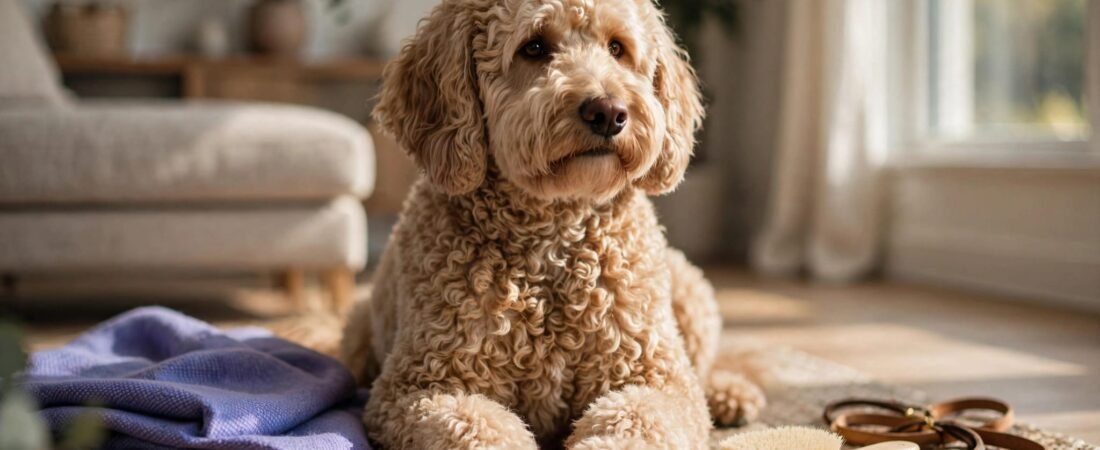
Your puppy’s fluffy coat can hide tangles, and a “hypoallergenic” promise can hide unrealistic expectations. Caring for a double doodle dog starts with understanding the individual you’ve brought home.
You don’t need a cupboard full of supplements or perfect training skills. You need consistent routines, realistic coat-care plans, and veterinary advice that fits your dog’s age and health.
Start with the ancestry behind the name, then build care around the dog in front of you.
Key Takeaways
- A Double Doodle combines Golden Retriever, Labrador Retriever, and Poodle ancestry, but size, coat, and personality vary.
- A Double Doodle may shed less, but that doesn’t guarantee allergy compatibility, and its dense coat can need daily attention.
- Before buying, ask an ethical breeder for both parents’ health testing records. After bringing your dog home, prioritize preventive care, balanced nutrition, and reward-based training.
What Is a Double Doodle Dog?
A Double Doodle typically comes from crossing a Goldendoodle with a Labradoodle. This mixed breed combines Golden Retriever, Labrador Retriever, and Poodle ancestry, with Poodle ancestry on both sides.
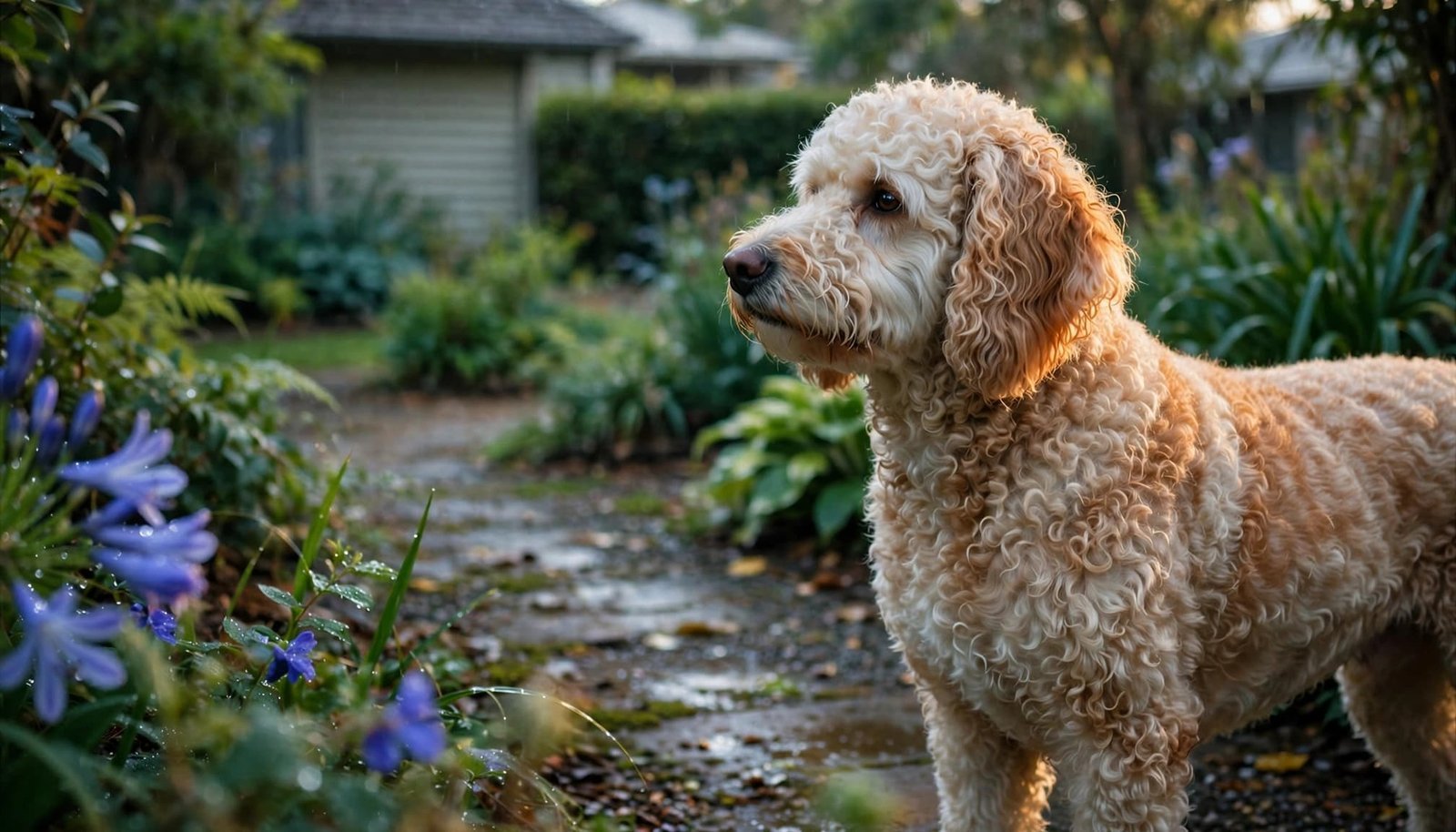
It isn’t an AKC-recognized breed and has no breed standard. Though sellers may call it a designer dog, it belongs among poodle mixes, not purebred breeds.
Compared with a Goldendoodle or Labradoodle, the label describes ancestry rather than a dependable difference in care. A mini double doodle label, for example, doesn’t refer to a standardized size.
Individual health, upbringing, and inherited traits matter more.
A puppy may inherit retriever sociability, Poodle curls, or a combination that differs from its littermates. Ancestry doesn’t guarantee friendliness, easy training, or a particular adult appearance.
Ask an ethical breeder to explain the Labradoodle side of the cross and share information about both parents. A Standard Poodle is only one possible Poodle variety in the ancestry, not a guarantee. Labels such as “multigenerational” need a clear family history behind them.
Double Doodle Size and Appearance
Adult Size Depends on the Parents
Mini, medium, and standard labels aren’t standardized. A mini double doodle label is a seller’s estimate, not a formal size category. One commercial profile gives these estimates, rather than validated breed averages.
| Seller’s Size Label | Estimated Adult Weight | Estimated Height |
|---|---|---|
| Miniature | 15 to 30 pounds | 14 to 17 inches |
| Medium | 30 to 50 pounds | 17 to 20 inches |
| Standard | 50 to 80 pounds | 20 to 26 inches |
Use these ranges as orientation, not a promise. For a mini double doodle, compare both parents’ weights and adult dogs from previous litters. Smaller size doesn’t automatically mean lower energy.
Color Doesn’t Predict Wellness
Your dog might have a curly, wavy, or straighter coat. Colors can include cream, apricot, chocolate, and black, with markings that vary between dogs.
A black dog needs the same health screening and coat care as any other color. Be cautious when a seller charges a premium while offering little health information.
Puppy fluff can also change as the adult coat develops, so early appearance can’t settle your long-term grooming needs.
Temperament and Family Compatibility
Friendly Temperament Still Requires Training
Double Doodles can be affectionate, sociable companions. However, a Double Doodle’s temperament also depends on genetics, early experiences, and daily handling.
Your puppy still needs help with jumping, mouthing, settling, and being alone. Intelligence can make learning easier, but a bored dog may find trouble in unexpected ways.
Reward calm behavior before excitement escalates. For example, give attention when all four paws stay on the floor rather than waiting for jumping to become a habit.
Match the Dog to Your Household
A mini double doodle can suit a household that can meet its exercise and coat-care needs. As a mixed breed, each dog can have a different energy level, and no ancestry guarantees that a dog will be safe or suitable for your family pets.
Supervise interactions, protect the dog’s sleeping area, and teach children to leave food and chews alone. Your dog should always have somewhere to retreat.
If you already have another dog, provide individual guidance and rest. A second dog won’t replace human support or resolve separation-related distress.
Before choosing a puppy, discuss noise sensitivity, work schedules, and your experience with an energetic adolescent dog.
Shedding and Allergy Expectations
A Double Doodle’s coat type affects shedding: some leave little hair around your home, while others leave noticeable amounts. Puppies may also lose hair during coat changes.
The AAAAI’s dog allergy guidance explains that no dog breed is truly hypoallergenic. Allergens come from proteins associated with saliva, dander, and other sources, not hair alone.
If someone in your household has allergies, speak with an allergist before committing. Spending time with the individual dog can help you assess your response, but it can’t guarantee future tolerance.
A coat that leaves little hair on your sofa can still trigger allergies and require substantial grooming.
Don’t treat a low-shedding promise as evidence of low maintenance. Loose hair may stay caught inside curls, where it contributes to tangles.
A Double Doodle puppy’s apparent allergy compatibility doesn’t establish how you’ll respond after prolonged exposure. Make a household plan before bringing the dog home, including what happens if symptoms become difficult to manage.
Grooming That Prevents Painful Mats
Brush Beneath the Fluff
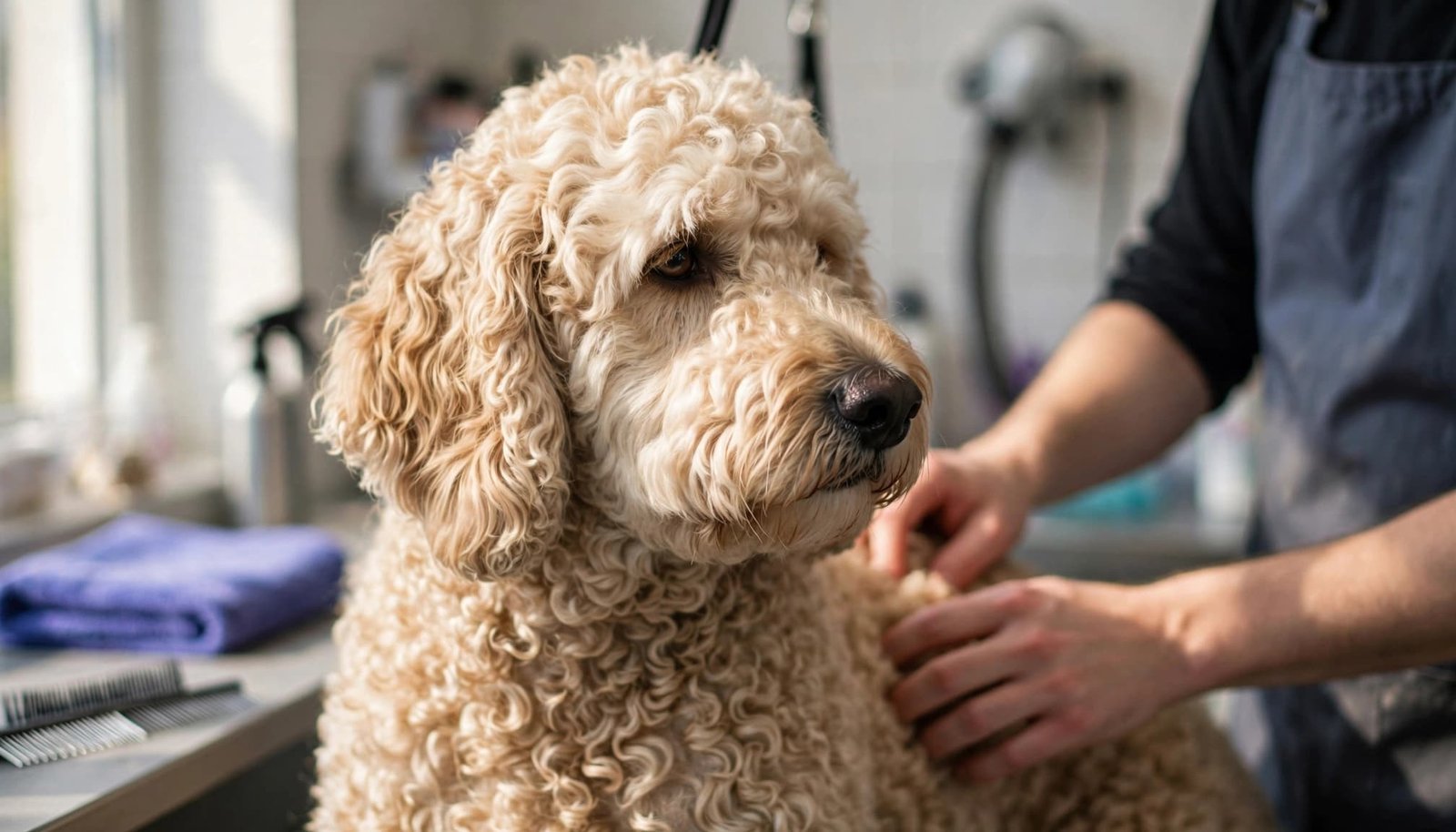
Check your double doodle’s coat daily, especially behind the ears, under the legs, and beneath the collar. Dense coats may need daily brushing.
Use a suitable slicker brush, then check your work with a metal comb. Work through small sections without dragging tools across the skin.
If the comb catches, slow down rather than pulling harder. Matting can be painful and may conceal irritated skin. Ask a groomer to demonstrate a comfortable technique, and don’t cut mats with household scissors.
Choose a Maintainable Haircut
Lancaster Puppies suggests professional grooming every six to eight weeks as a starting point. Your groomer may recommend a different interval based on coat texture, length, and home care.
A shorter haircut can make daily maintenance easier for your double doodle. Discuss comfort and practicality before choosing a long, fluffy style.
Introduce handling gradually with rewards, including brief paw touches and gentle brushing. After bathing or swimming, dry the coat thoroughly because trapped moisture and tangles can cause problems.
Ask the salon what its quote includes, such as bathing, clipping, nails, and extra charges for severe tangles. A dog that’s frightened by salon visits may need shorter introductory appointments before a full session.
Exercise and Training for Everyday Calm
Give Activity a Purpose
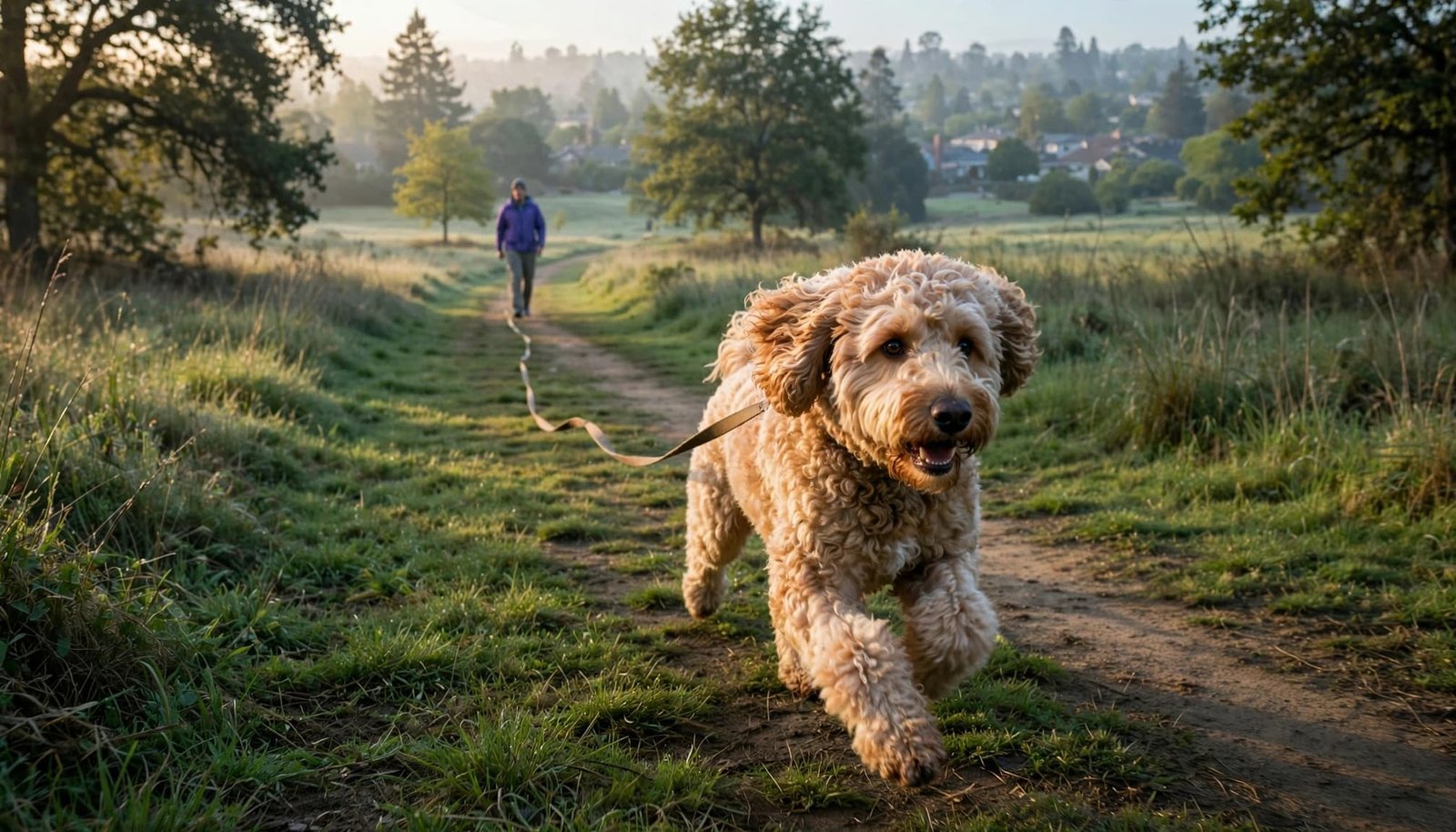
Commercial profiles commonly suggest about an hour of daily activity for a healthy adult double doodle. Treat that as a planning estimate, then adjust for age, fitness, weather, and veterinary advice.
Combine sniffing walks with suitable play rather than relying on nonstop fetch. Your dog also needs time to rest.
For a puppy double doodle, choose shorter, age-appropriate outings. Avoid imposing an adult running schedule on growing joints, and ask your veterinarian before starting repetitive high-impact exercise.
Teach Skills You Use Daily
Reward-based training supports recall, loose-leash walking, and calm handling. Practice in brief sessions while your dog can still concentrate.
Use part of the daily food allowance for scent searches or food puzzles. Supervise unfamiliar enrichment toys and remove damaged items.
Teach your dog to settle while you’re nearby, then build comfortable alone time gradually. If barking, destruction, or panic appears during absences, seek qualified help early.
A dog that suddenly becomes reactive or resists handling also needs a health check. Pain can change behavior, even when the problem first looks like disobedience.
Nutrition Without Guessing at Cup Counts
Choose Food for the Life Stage
Select a complete and balanced food appropriate for growth or adult maintenance. In the United States, check the nutritional adequacy statement rather than choosing by attractive packaging.
If your puppy is expected to become large, ask your veterinarian about a formula suitable for large-size growth. Adult maintenance food isn’t a substitute for puppy nutrition.
Your dog doesn’t automatically need grain-free food, specialty supplements, or expensive toppers. Bring dietary concerns to your veterinarian before making restrictions.
Adjust Portions to Your Dog
A universal “two-and-a-half to three cups daily” rule ignores differences in size and food calories. Even a mini double doodle needs an individualized amount. Start with the manufacturer’s guide, then adjust using body condition and veterinary advice.
You should generally feel the ribs beneath a light covering and see a waist. Because curls can hide weight changes, use your hands as well as your eyes.
Include treats, chews, and toppers in the total calorie intake. Treats should generally provide no more than 10% of daily calories.
If you change foods, transition gradually unless your veterinarian advises otherwise. Persistent diarrhea, vomiting, or weight loss needs medical attention rather than repeated experiments with new products.
Health Risks and Preventive Care
As a mixed breed, a Double Doodle may develop genetic issues associated with any ancestral breed, although reliable Double Doodle-specific disease rates aren’t established.
Potential concerns to discuss with your veterinarian include hip dysplasia, elbow problems, inherited eye disease, and certain heart conditions. Poodle ancestry can also bring conditions such as sebaceous adenitis or Addison’s disease.
These are possibilities to discuss, not predictions about your puppy.
Arrange a veterinary visit soon after adoption or purchase. Bring vaccination, deworming, identification, and parent-health records.
Your veterinarian can tailor vaccination and parasite prevention to your location and activities. Also, build a dental-care routine with dog-safe toothpaste and gradually introduced brushing.
Watch for persistent itching, ear odor, limping, or changes in drinking and urination. Don’t assume these problems are normal for doodles.
For larger, deep-chested dogs, discuss gastric dilatation-volvulus, often called bloat. Unproductive retching, a swollen abdomen, and marked distress need emergency care.
Keep a simple record of appetite, weight, medications, and unusual symptoms. Technology can help record trends, but an activity tracker can’t diagnose illness or replace an examination.
Health Clearances to Request Before Buying
Ask an ethical breeder for identified, verifiable health testing results for both parents. Testing should reflect all relevant ancestry, not just one convenient DNA panel.
These recommendations provide a starting point for discussing screening with your veterinarian. A Double Doodle is a mixed breed, so recommendations may vary with its purebred ancestry.
| Ancestry | Screening to Discuss |
|---|---|
| Golden Retriever | Hips, elbows, eyes, heart, and permanent identification. |
| Labrador Retriever | Hips, elbows, eyes, exercise-induced collapse DNA, and D-locus DNA. |
| Toy Poodle | prcd-PRA DNA, annual eye examination, and patellar evaluation. |
| Miniature Poodle | The Toy Poodle screenings plus hips. |
| Standard Poodle | Hips, annual eye examination, and at least one CHIC option: thyroid, sebaceous adenitis, or cardiac testing. |
Requirements differ by breed and Poodle variety; there isn’t a dedicated Double Doodle CHIC protocol. For a Labradoodle line, discuss the Labrador-specific screenings with your veterinarian as well.
The Golden Retriever Club’s screening guidance explains examinations beyond DNA testing. The Labrador Retriever Club’s health information covers inherited concerns and screening resources. D-locus testing concerns coat-color inheritance, so it isn’t proof of overall health.
For Labrador breeding dogs, the club specifies hip and elbow clearances at or after 24 months and an eye clearance within one year of breeding. Ask how current the records are. For Standard Poodle ancestry, request the applicable screenings listed above.
Finally, inspect the results themselves. Under the OFA CHIC program, a CHIC number means the required testing was completed and made public. It doesn’t mean every result was normal.
A general veterinary check, DNA ancestry report, or written health guarantee doesn’t replace these records. Your veterinarian can help interpret what the tests cover and which risks remain for your Double Doodle.
Price and Acquisition Choices
Look Beyond the Puppy Price
Lancaster Puppies publishes estimates of $1,000 to $3,000, with a separate $1,500 to $5,000 estimate for puppies from breeders who document health testing. These figures can help frame a mini double doodle’s cost, but they aren’t national transaction averages or proof that any seller is responsible.
Before paying a deposit, request health records, a health guarantee, a contract, socialization details, and a chance to understand the dogs’ living conditions. An ethical breeder should be willing to discuss these details.
The ASPCA’s responsible breeding criteria offer useful standards beyond a polished website. Pressure to pay quickly, vague parent information, or unexplained test results deserve scrutiny, though none alone proves a seller is a puppy mill.
Your first-year budget also needs veterinary care, grooming, equipment, and training. At six- to eight-week grooming intervals, plan for roughly seven to nine appointments annually. Get local quotes rather than assuming a universal grooming price.
Compare Adoption With Buying
Adoption can reduce the upfront acquisition cost and give you a clearer picture of an adult dog’s size and coat. A rescue dog may be listed as a labradoodle, one of several poodle mixes, or simply a mixed breed. However, shelters may not know its ancestry, and behavior can change after settling into your home.
Ask what the organization has observed about handling, other animals, and time alone. Also, review available medical records and the return policy.
If predictable low-shedding traits matter most, consider a responsibly bred Poodle as another option. A purebred Poodle still needs grooming, exercise, and health testing.
Whether you adopt or buy, choose documented care and a suitable individual over a designer label.
Caring for an Aging Dog
If you’re wondering how long do double doodle dogs live, commercial profiles estimate 12 to 15 years. This unverified range isn’t a guarantee, since no breed-wide norm has been independently established.
As your dog ages, notice changes in mobility, sleep, appetite, and willingness to climb stairs. Slower movement can reflect treatable pain, not unavoidable decline.
Keep exercise regular, but adjust its intensity. Non-slip flooring and a supportive resting place can make daily life easier.
Ask your veterinarian when to increase examination frequency and whether bloodwork or other monitoring is appropriate. Senior care should reflect your dog’s condition, not just a birthday.
Also, reconsider grooming comfort. Standing through long appointments may become difficult, so ask the salon about shorter sessions and supportive handling.
Your most useful tool is a record of changes, helping your veterinarian compare today’s behavior with your dog’s usual habits.
Build Wellness Around Your Individual Dog
Your Double Doodle’s health depends on consistent, individualized care, not promises tied to its name. Verify health records, maintain the coat, and adjust food and activity as your dog changes.
You don’t need to solve every care question at once. Establish a veterinary relationship and a manageable daily routine, then build confidence by observing your dog.
A healthy partnership starts with realistic expectations about the dog in front of you.
Frequently Asked Questions
Are Double Doodles Good Family Dogs?
They can be, if your household can commit to training, grooming, and daily activity. Behavior and temperament vary, so consider whether your family can support an energetic adolescent dog as well as a fluffy puppy. An adult dog with an observed temperament may offer more certainty.
Are Doodles Double-Coated Dogs?
“Doodle” doesn’t identify one coat structure. Retriever ancestry includes double coats, while Poodle ancestry has a different coat pattern. Your mixed-breed dog may inherit varying density and texture, so ask an experienced groomer to assess the individual coat before choosing tools.
Are Double Doodles Good Hunting Dogs?
Some individuals may have useful retrieving instincts, but the Double Doodle label doesn’t establish working ability. If hunting is your priority, evaluate demonstrated performance, suitable health clearances, and training needs. Retriever ancestry alone doesn’t guarantee a dependable hunting companion.
Are Double Doodles Hypoallergenic?
No dog is guaranteed to be hypoallergenic. Shedding and allergy responses vary by individual, and even dogs with similar coats can affect people differently. Spend time with the dog before bringing one home, and consult an allergist if you have concerns.