
When your Doodle seems to follow you everywhere, your company may feel pleasant, familiar, and safe. Curiosity, boredom, and learned habits can also explain the furry escort service; your velcro dog isn’t necessarily distressed, and following alone doesn’t mean separation anxiety.
Still, having a bathroom chaperone can make you wonder whether your dog feels loved or worried. The useful distinction is how your Doodle handles distance, so start there before blaming yourself for excessive cuddling.
Key Takeaways
- Following is often normal social behavior, especially when your dog can also rest without you.
- Panic during separation matters more than how many rooms your dog visits.
- Encourage independent settling, build distance gradually, and seek veterinary help for sudden clinginess or distress.
Why Your Doodle Follows You Everywhere
Your movements offer information. Getting up might mean breakfast, a walk, or the thrilling possibility that something edible has fallen.
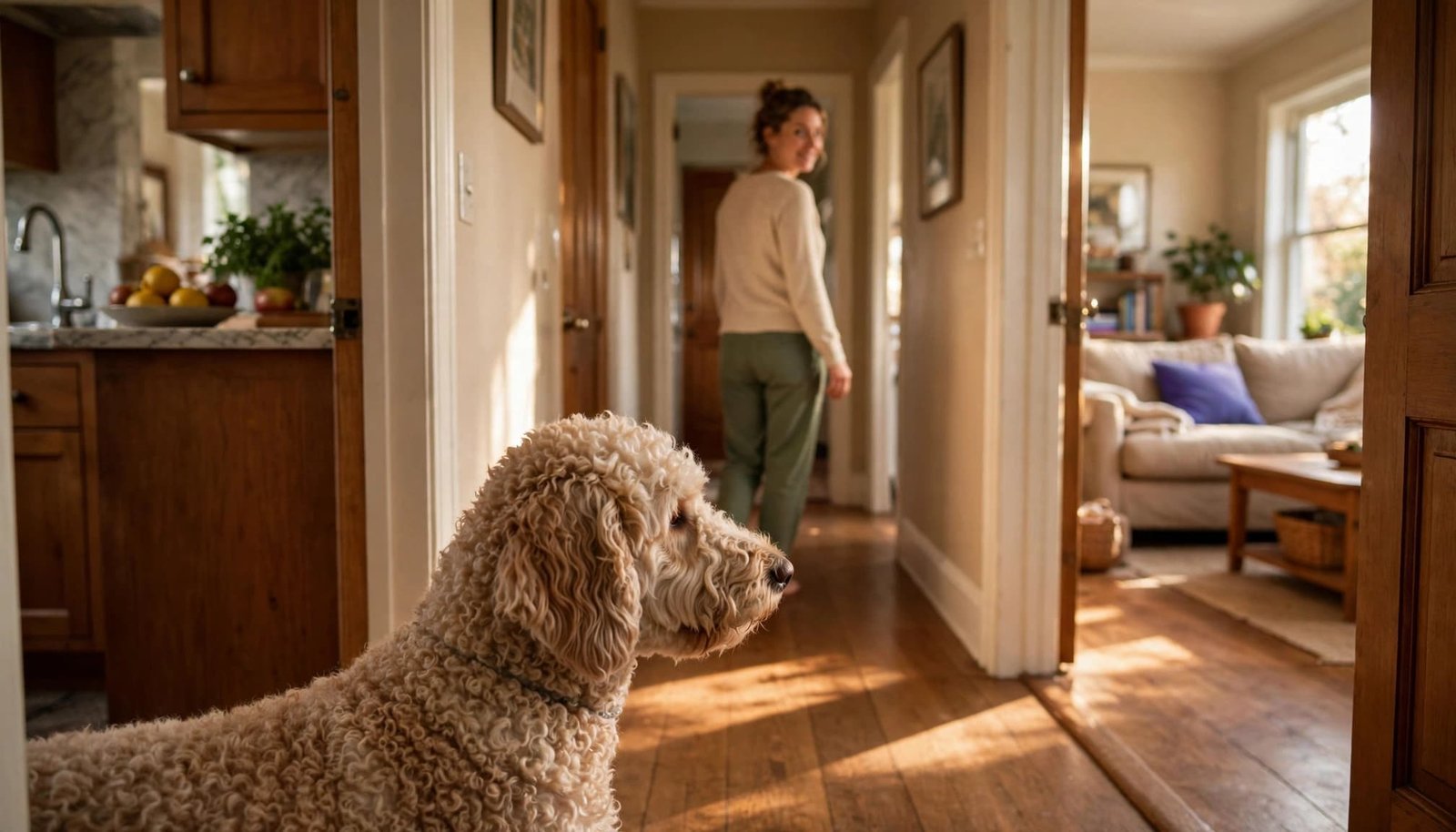
You’re their familiar person
Dogs are social animals. In its explanation of why dogs follow their people, PetMD describes dogs as pack animals that adopt their human family when separated from canine companions. Pack mentality helps explain this social behavior, but it doesn’t mean your household needs an “alpha.”
Ironstone calls Goldendoodle shadowing “Proximity Drive.” It describes Golden Retrievers and the Poodle, the Goldendoodle’s parent breeds, as highly human-focused. That’s Ironstone’s description, not proof that every Goldendoodle has the same temperament. Following a familiar person is an ordinary social instinct, and a dog that shadows you can seem like a velcro dog.
PetMD also names Chihuahuas, Border Collies, and Labrador Retrievers as frequent followers, while describing terriers as more independent. Your dog’s individual temperament still matters.
Following has paid off before
If trailing you produces snacks, conversation, or ear scratches, your dog has a reason to repeat it. Even scolding provides attention, which PetMD warns can accidentally reward following.
A stare may also mean your Doodle expects a familiar cue. You moved toward the leash hook; naturally, management requires clarification.
That responsiveness helps explain why Goldendoodles are so popular. However, affectionate Goldendoodle behavior doesn’t automatically include the ability to relax independently. You can teach that skill without reducing the affection.
Why Does Every Room Need a Doodle Inspection?
The destination sometimes explains the behavior better than your dog’s attachment does.
The bathroom has surprisingly strong appeal
PetMD points to intense smells and interesting objects, including the wastebasket, as reasons dogs investigate bathrooms. Your private retreat contains an entire scent collection.
If your Doodle calmly follows, sniffs, and flops down, curiosity and routine may explain the visit. You’re also conveniently stationary, which makes you an excellent companion for a short floor nap.
Bathroom following doesn’t diagnose separation anxiety. More useful information comes from what happens when access changes: can your dog settle elsewhere, or does a closed door trigger escalating distress? Keep rubbish and toiletries inaccessible either way.
Boredom and frightening noises increase following
A bored dog may shadow you because nothing else is happening. PetMD recommends more exercise when insufficient activity contributes to following.
Give your Doodle suitable movement and sniffing opportunities, then allow quiet recovery. A tired dog is often more content, but exhaustion isn’t an anxiety treatment. Puppies need age-appropriate activity and substantial rest, rather than an adult workout schedule.
Meanwhile, thunderstorms and fireworks can send your dog closer because you feel protective and familiar. Offer comfort when they seek it, and reduce noise where possible. You don’t need to turn a frightening evening into a test of independence.
Is It Affection or Separation Anxiety?
Watch your dog’s response to being apart, especially whether they become anxious, rather than counting hallway trips.
Ordinary following leaves room for relaxation
Your Doodle may prefer your company yet remain comfortable when you move away. Look for whether your dog can redirect attention to resting, investigate something else, or stay settled while you use another room.
Context matters. Following before dinner may reflect anticipation. Following only during thunder suggests fear. A pattern tied to your departure deserves closer attention.
A dog can follow you all evening and still cope comfortably alone. Another may rest nearby but become distressed the moment you leave.
Distress continues after access to you disappears
Happy Pup Manor lists whining, pacing, and destructive chewing when left alone as warning signs. The ASPCA’s separation anxiety guidance also describes pacing and destructive behavior.
Those signs need context; one chewed cushion doesn’t establish a diagnosis. Record a departure to see whether your dog settles or becomes increasingly distressed.
If your Doodle panics when you disappear, stop testing longer absences. Seek help from your veterinarian and a qualified positive-reinforcement trainer or veterinary behaviorist. Don’t punish the behavior or leave your dog to panic until they become quiet.
Why Do Puppies and Older Dogs Become Clingier?
Your dog’s life stage can change what closeness means.
Puppies and newly adopted dogs need predictability
PetMD describes puppies as becoming “imprinted” on their new family. Newly adopted dogs may also act clingy while learning household routines.
You know where dinner happens and which door leads outside. Your newcomer doesn’t yet have that information, so following you makes practical sense.
Keep meals, toilet opportunities, and rest predictable. Start positive-reinforcement practice early, including brief settling exercises while you’re nearby. Before treating following as a training problem, consider whether your puppy needs the toilet or a quieter place to sleep. Comfort and gradual learning can happen together; you don’t need to withhold reassurance.
New clinginess in an older dog deserves attention
Hearing or vision loss, joint problems, and cognitive decline can increase following, according to PetMD. Its guidance on senior-dog behavior changes also explains that pain and medical conditions can affect behavior.
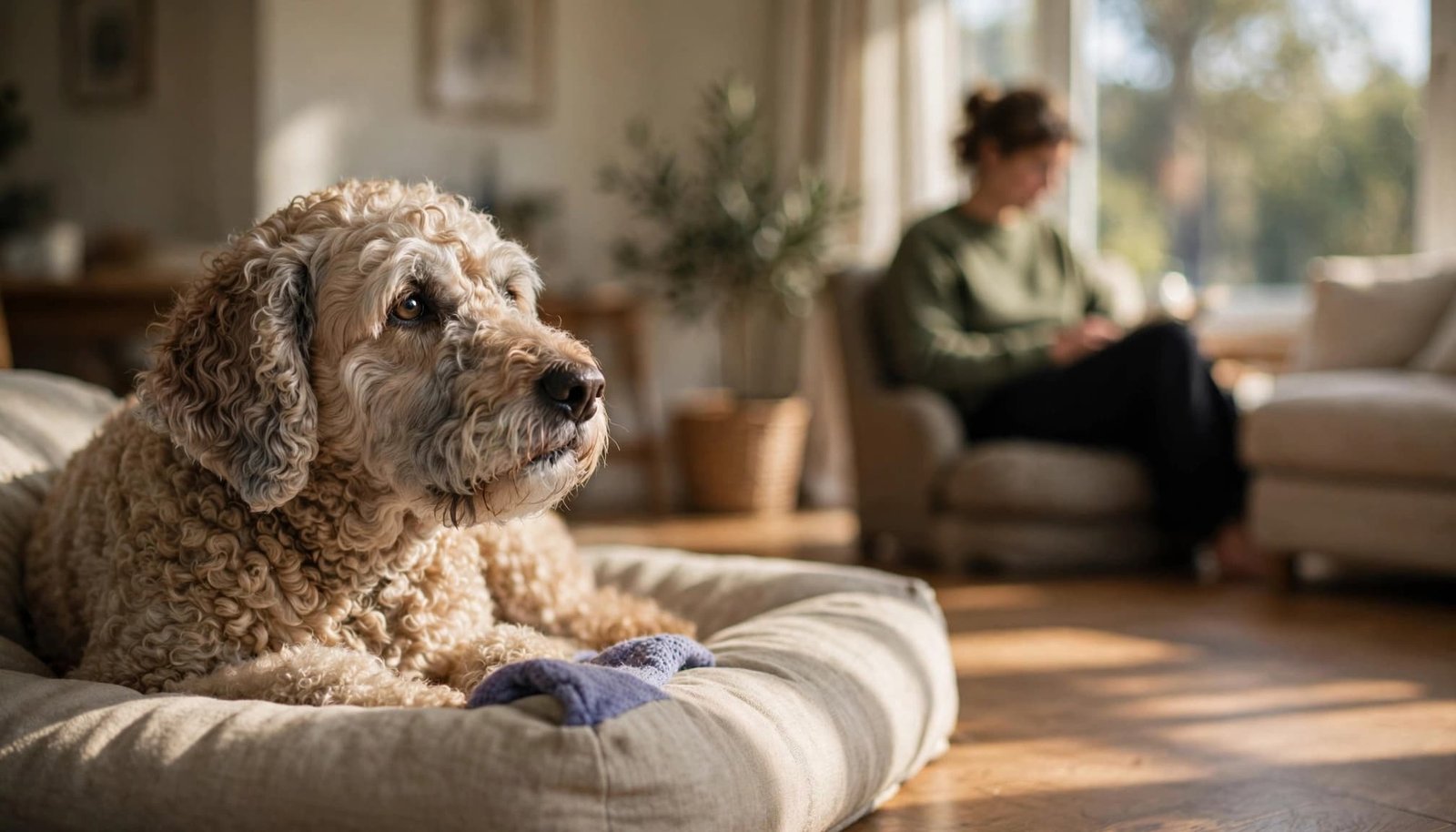
Arrange a veterinary checkup for sudden new clinginess, especially alongside sleep changes, confusion, or reluctance to move. Don’t dismiss it as your senior becoming “extra sweet.”
Keep resting spaces accessible and routines familiar. If stairs become difficult, your dog may need help with comfort and mobility rather than more obedience practice.
How Can You Teach Your Doodle to Settle Without You?
Work below your dog’s distress threshold. Your goal is comfortable distance, not a longer endurance record.
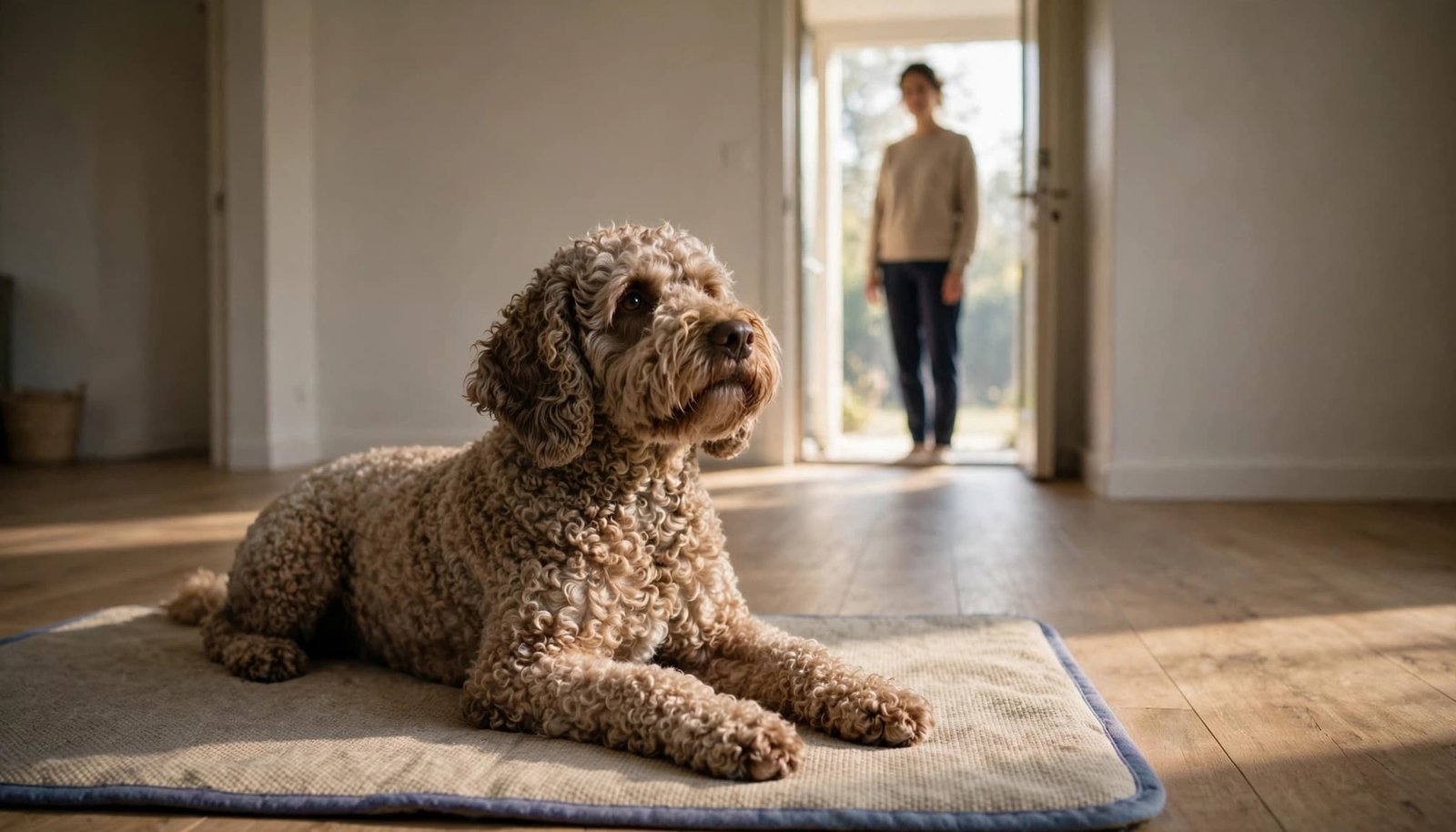
Reward the behavior you want to keep
PetMD advises withholding attention during routine following, then offering interaction or treats once your dog settles elsewhere. This applies to comfortable, attention-seeking behavior, not a frightened dog asking for help.
Notice independent resting before your Doodle gets up. Calmly reward that behavior where they’re resting, rather than calling them over.
Keep it low-key. A celebration loud enough to restart the household parade defeats the purpose.
Teach “place” before adding distance
Choose a comfortable mat in a quiet area. Reward voluntary approaches and resting there, then introduce your place command to cue settling on the mat.
PetMD recommends the stay command to teach that remaining in a safe area is okay. Practice nearby first, then add a little movement only while your dog stays comfortable. Make the exercise easier if they struggle.
Other household members should use the same cues and reward calm pauses too.
Keep door practice comfortable
Ironstone suggests closing a door for about 30 seconds, then returning when the dog is quiet. For a whining puppy, it recommends waiting for a 3-second quiet window before reappearing.
Those timings aren’t universal starting requirements. Use shorter separations if needed, and return before distress develops. If whining escalates toward panic, don’t prolong the separation to obtain silence.
End the exercise calmly and make the next attempt easier. Repeated distress calls for professional guidance, not more determination with the door handle.
Will a Crate Help Your Doodle Feel Secure?
A crate can offer a comfortable resting space when your dog enters voluntarily and has positive associations with it. Introduce it through relaxed visits rather than closing the door during a crisis.
However, confinement doesn’t teach comfort with separation by itself. The American Kennel Club’s crate-training guidance warns that dogs with separation anxiety may panic in confinement and injure themselves trying to escape.
Use the resting arrangement your individual dog tolerates comfortably. Protect that space from noise, children, and interruptions so your Doodle can get proper rest.
Also, meet practical needs first. It can’t replace a toilet break, suitable activity, or companionship. A full bladder is a reasonable objection to the training agenda.
Frequently Asked Questions
Does following mean you’re your Doodle’s favorite person?
It may reflect a strong relationship, but following isn’t a reliable ranking system. You may handle meals, walks, play, or the routines your dog understands best.
Goldendoodle attachment to owners can involve several family members in different ways. Let others build positive relationships through enjoyable activities and calm care. You don’t need to compete for the prestigious title of Most Frequently Escorted Human.
Should you get another Doodle to stop the following?
A second dog doesn’t replace human support or resolve separation-related distress. It also brings another individual set of exercise, rest, grooming, and training needs.
In a multi-Doodle household, provide individual guidance and protected resting time. Matching birthday bandanas can be a household tradition; matching coping skills still require separate attention. Choose another dog because your household can support one, rather than as treatment for the first dog’s anxiety.
Help Your Doodle Feel Safe, Even Out of Sight
Your Doodle’s room-to-room companionship can be a normal part of your bond. The meaningful goal is comfortable independence, alongside all that affection.
Encourage settling and introduce distance at your dog’s pace. Treat panic or sudden behavioral changes as reasons to seek help.
You can enjoy your furry escort without making every trip to the laundry room a training emergency.