
To socialize your Double Doodle puppy safely, introduce new experiences gradually, reward relaxed behavior, and let your dog choose whether to approach. Follow your veterinarian’s guidance on precautions before vaccination is complete.
Successful socialization builds confidence, rather than collecting greetings or exhausting your dog. Start during the early learning window, then add experiences at a pace your dog can handle.
Key Takeaways
- Begin during the roughly 3-to-16-week socialization window, without waiting for the entire vaccination series to finish.
- Keep experiences brief and positive, and increase distance whenever your puppy looks uncomfortable.
- Include grooming, quiet observation, and settling practice alongside introductions to people, dogs, sounds, and surfaces.
Start Within the Early Socialization Window
Dogs are especially receptive to unfamiliar experiences between approximately 3 and 16 weeks, the critical socialization period. Experiences during this time help shape later behavior, including responses to strangers, handling, and unfamiliar places.
The American Veterinary Society of Animal Behavior identifies the first three months as particularly important in its puppy socialization position statement. This socialization window isn’t a deadline, but early positive exposure gives you a useful foundation.
Calm observation is part of learning, too. Your puppy can watch a bicycle pass without chasing it or see another dog without greeting.
Aim for calm curiosity. One comfortable encounter teaches more than several overwhelming ones.
Protect Your Puppy Before Full Vaccination
Waiting until every puppy vaccination is complete can mean missing much of the early socialization window. Unrestricted access to unfamiliar dogs and contaminated ground also creates avoidable infection risks.
AVSAB supports appropriate socialization before full vaccination. Controlled exposure still carries some risk, so your veterinarian should tailor precautions to your dog’s health and local disease conditions.
The AAHA canine vaccination guidelines provide the medical framework for vaccination decisions. Socialization supports behavioral development, but it doesn’t replace preventive care.
Before broader ground-level outings, you can carry your puppy, use a clean stroller, or watch activity through an open car window while parked. Avoid hot parked vehicles, even during brief stops.
Arrange introductions with known, healthy, vaccinated dogs rather than unfamiliar groups. Skip dog parks, shared water bowls, and heavily used dog-toileting areas during this vulnerable stage.
For classes, choose a reward-based program with vaccination requirements, cleaning procedures, and supervised interactions.
A Double Doodle Puppy Socialization Plan by Age
Use these stages as a flexible socialization guide. Your puppy’s comfort matters more than completing a schedule.
Weeks 3 to 8: Build Gentle Foundations
Before your puppy comes home, the breeder or foster caregiver usually manages early exposure. This includes gentle handling, ordinary household sounds, and brief experiences with different surfaces.
Ask what your puppy has already encountered and how they responded. Descriptions of comfortable exploration are more useful than a claim that the puppy was “raised around everything.”
Once home, begin in familiar rooms and keep routines predictable. Give them a quiet place to retreat.
Weeks 8 to 12: Add Controlled Experiences
Try one- to three-minute introductions, then pause while your puppy is still comfortable. A visitor sitting quietly may offer more useful learning than several people reaching toward them.
Pair each new sight or sound with a small food reward. Let them observe without requiring an approach.
Introduce one calm adult dog at a time, with close supervision and breaks. Choose gentle, well-socialized dogs that respect puppy signals, rather than rough playmates.
Weeks 12 to 16: Expand Without Rushing
Gradually add movement, unfamiliar clothing, and slightly busier surroundings as veterinary precautions allow. Change one part of an experience at a time.
For example, first observe a stationary bicycle at a distance. Later, watch someone walk it past, then ride slowly farther away.
Continue easy experiences between harder ones. A puppy that needs more distance hasn’t failed and doesn’t need you to push harder.
Cover the Experiences Your Puppy Will Meet
Choose experiences that fit your household and neighborhood. Your puppy doesn’t need to encounter everything before 16 weeks, but variety helps them respond calmly to unfamiliar things.
These categories offer a practical starting point.
| Category | Experiences to Introduce |
|---|---|
| People | Adults with varied appearances, supervised children, hats, backpacks, and mobility aids |
| Animals | Calm adult dogs and household pets behind suitable barriers |
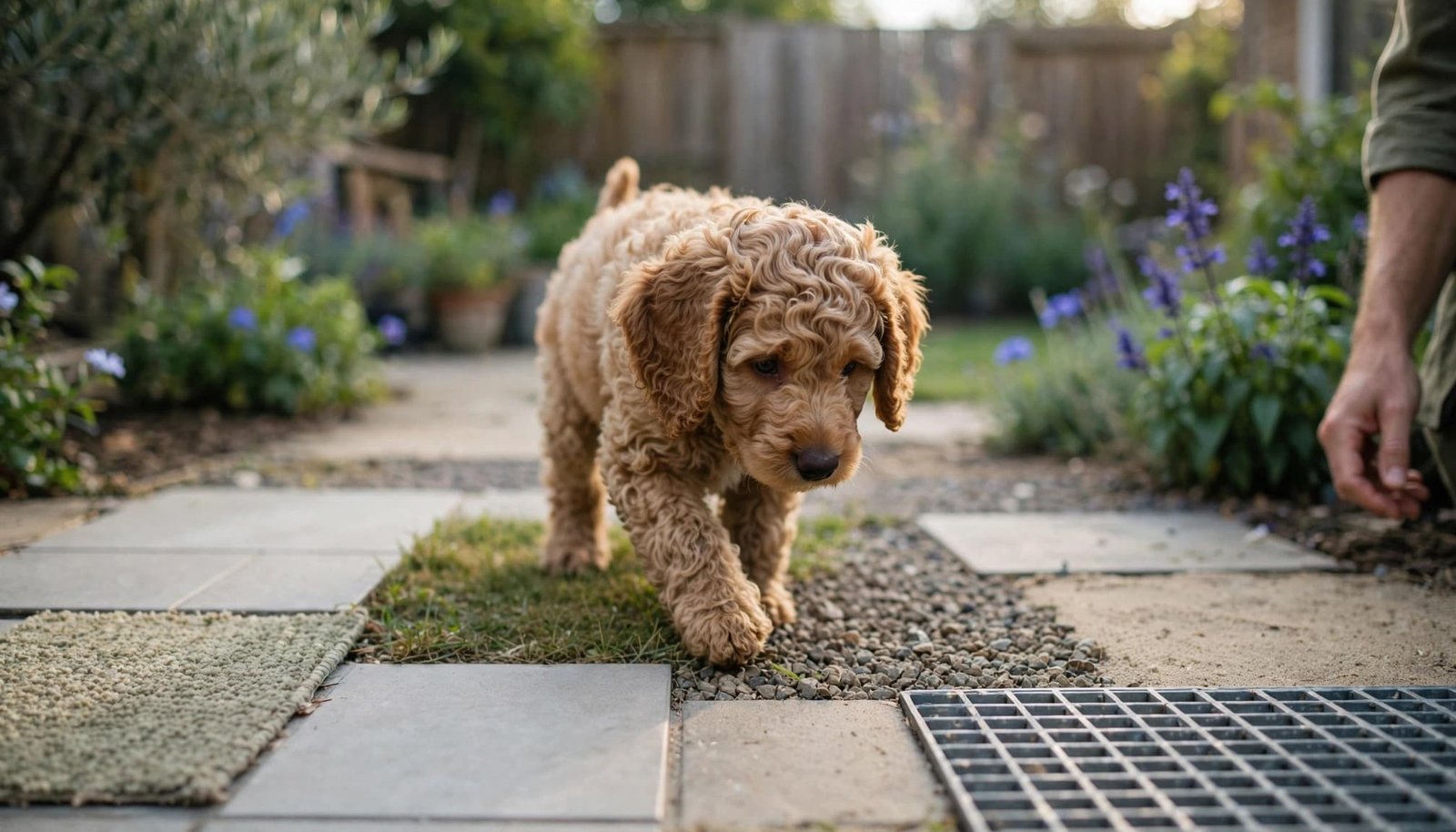
| Surfaces | Carpet, tile, wood, grass, gravel, sand, and secure metal grates |
| Sounds | Quiet recordings of thunder and fireworks, plus traffic, vacuum cleaners, and doorbells |
| Objects | Umbrellas, strollers, bicycles, skateboards, and household equipment |
Introduce surfaces only where footing is stable and paws can’t get trapped. Let your dog investigate voluntarily.
For sound recordings, start barely audible and increase the volume only while your dog stays relaxed. Don’t use an actual fireworks display for an introduction.
Open an umbrella at a distance before placing it nearby. Keep skateboards stationary before introducing movement.
The goal of exposure is calm, voluntary familiarity, not completing a checklist.
Read Fear and Excitement Before Adding More
Your puppy’s body language tells you whether an experience is helping. Watch the whole body rather than relying on a wagging tail.
Respond Early to Discomfort
A tucked tail, lowered posture, repeated attempts to leave, barking, or crying means you should create distance. Freezing, lip licking, and suddenly refusing familiar food can also indicate discomfort.
Move somewhere quieter and let your puppy observe without pressure. Offer comfort if they seek it.
A puppy that becomes motionless during handling may be frightened rather than cooperative. Pause and look for relaxed, voluntary participation.
Don’t pull your puppy toward an object or use treats to lure them closer when they’re trying to retreat. Reward curiosity where they already feel comfortable.
Adjust for Fear Periods and Overexcitement
Some puppies experience temporary increases in fear that may last around one to two weeks. Reduce novelty, revisit easy activities, and keep routines predictable.
Don’t assume every sudden behavior change is a fear period. Pain or illness can also affect behavior, so seek veterinary help for abrupt or persistent changes.
For jumping or frantic play, add distance and a rest break. Avoid leash corrections or scolding, which can create unpleasant associations.
The AVSAB behavior position statements support reward-based training.
Make Grooming a Comfortable Daily Experience
A double doodle’s coat can need substantial care, so comfort with grooming belongs in your socialization plan.
Teach Handling in Tiny Sessions
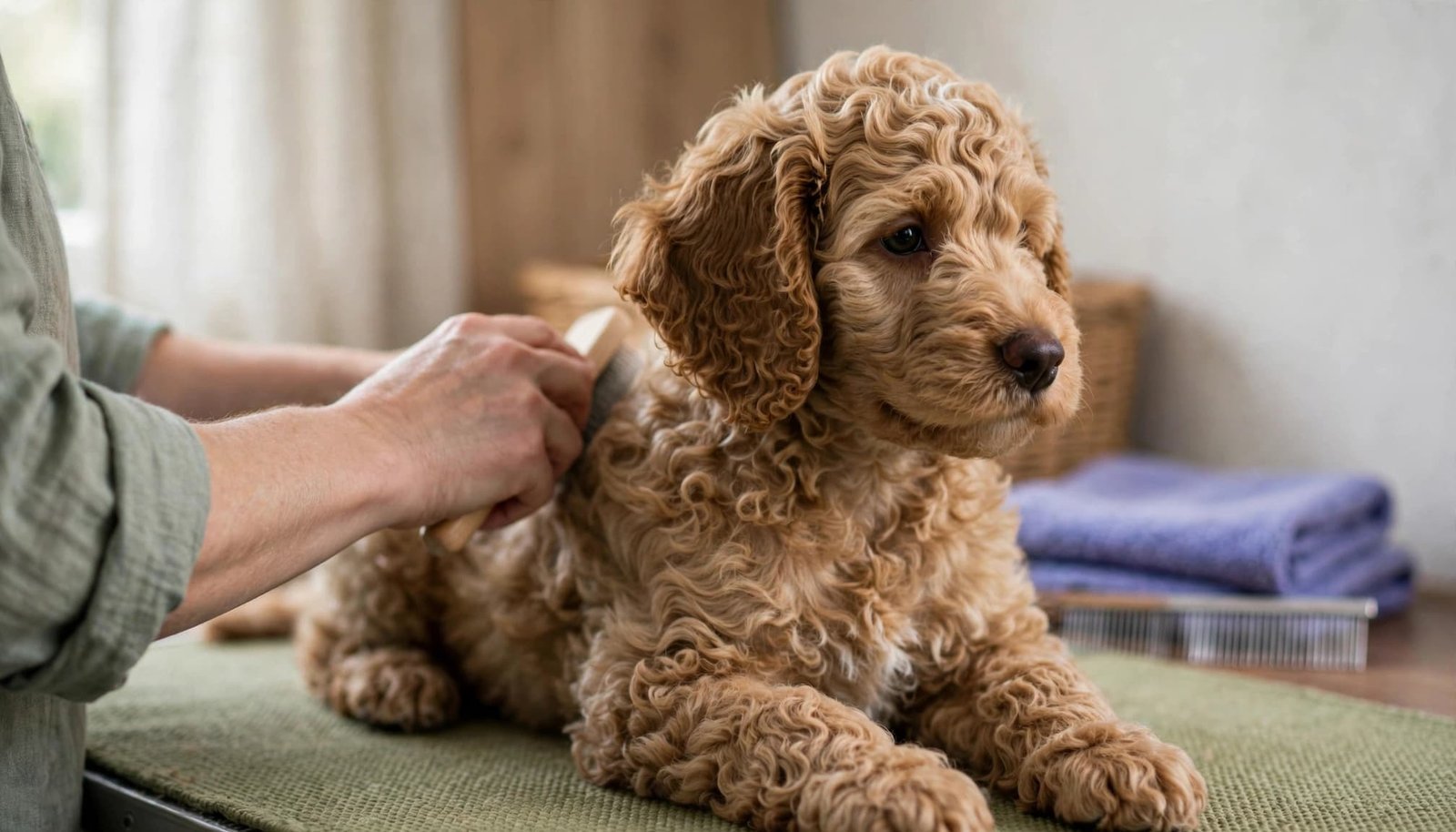
Begin when your puppy is calm. Briefly touch a shoulder or paw, offer treats, and release.
Next, introduce one gentle brush stroke. Build duration gradually rather than attempting a full session immediately.
Let them inspect the tools before you touch their coat. Consider short introductory salon visits when health precautions allow.
If they flinch or struggle, stop and reassess. Don’t use treats to continue brushing that appears painful.
Match Maintenance to the Individual Coat
Weekly brushing may be insufficient for a dense, longer coat. Inspect daily, especially behind the ears, beneath the collar, and under the legs.
Poodle-influenced coat texture and shedding can vary. Use a suitable slicker gently, then a metal comb to find missed tangles in the coat.
Professional grooming every six to eight weeks is a starting point, with timing adjusted to the dog’s texture and haircut.
Dry the coat and outer ears after swimming or bathing. Use ear cleaners only as your veterinarian recommends; odor, redness, or pain needs veterinary attention.
Frequent bathing with harsh products can dry the skin. Never cut tight mats with household scissors.
Build Habits for Your Individual Double Doodle
A Double Doodle combines Goldendoodle and Labradoodle lines, drawing on Golden Retriever, Labrador Retriever, and Poodle ancestry. Goldendoodle and Labradoodle lines vary, including in their Poodle background, so this mix has no standardized temperament or coat.
Larger double doodles are commonly estimated at 20 to 29 inches tall and 50 to 80 pounds. Mini lines may be smaller. Size and coat color don’t predict confidence or grooming needs.
For a healthy adult, around an hour of daily exercise is a planning estimate, adjusted for fitness and health. A puppy needs shorter, age-appropriate activity and plenty of rest, not an adult running schedule.
Apartment living requires reliable toilet access, appropriate activity, and opportunities to settle away from noise.
Start reward-based training immediately. Reward greetings with four paws on the floor, practice loose-leash walking, and introduce a crate through comfortable, voluntary visits. Build alone time gradually without leaving your puppy to panic.
If you’re still choosing a puppy, prioritize documented parent health testing and observed temperament over appearance or price. A premium purchase price doesn’t establish responsible breeding.
Frequently Asked Questions
Is It Too Late to Socialize After 16 Weeks?
No. Your dog can continue learning throughout life, although unfamiliar experiences may need more gradual introductions after the early window.
Begin at a comfortable distance and reward relaxed observation. For persistent fear, lunging, or difficulty recovering, seek a qualified reward-based trainer or veterinary behaviorist.
Are Double Doodles Good Family Dogs?
A Double Doodle can be a good family dog when you can meet its activity, grooming, and training needs. An affectionate puppy still needs help learning boundaries.
Supervise interactions with children and protect the dog’s resting space. Teach children to leave food and chews alone. Ancestry doesn’t guarantee safe behavior around children or other pets.
Are Double Doodles Hypoallergenic?
No dog, including a Double Doodle, is guaranteed hypoallergenic, and shedding varies between individuals. A puppy’s coat may change as it develops.
Loose hair can still get trapped and form mats. Grooming needs depend on your dog’s individual texture, not its label alone.
Raise Confidence One Experience at a Time
Safe socialization combines early learning, sensible health precautions, and attention to your puppy’s signals. Let comfortable participation guide you, and allow your puppy to pause or move away.
Choose one manageable experience today and finish while your Double Doodle is relaxed. Repeated, positive encounters give your dog a stronger foundation than crowded outings or forced greetings.