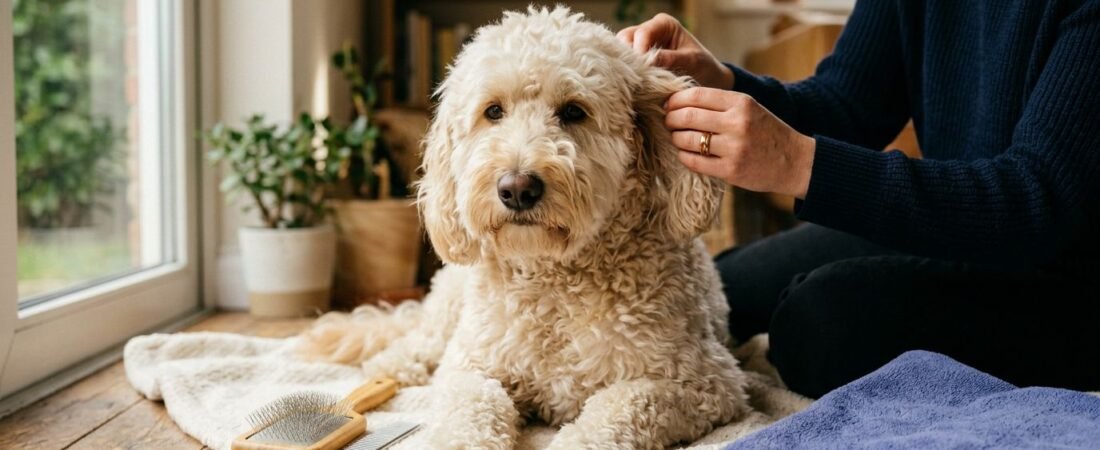
Your doodle can look freshly brushed while tangles tighten underneath the fluff. To prevent doodle matting, you need to check the coat near the skin, work through small sections, and catch trouble before brushing becomes painful.
A low-shedding coat can still demand substantial care because loose hair stays trapped inside curls. The goal is comfortable maintenance, not a perfect hairstyle.
Start by understanding what your dog’s coat needs, then build a routine you can keep.
Why Your Doodle’s Coat Keeps Tangling
Curls Hold Loose Hair Close to the Skin
A curly coat can trap shed hair close to the skin instead of letting it fall around your house. As your dog moves, loose strands twist together with surrounding hair. Friction from collars, harnesses, and everyday activity can worsen tangles and contribute to goldendoodle matting.
A Double Doodle’s Golden Retriever, Labrador Retriever, and Poodle ancestry doesn’t predict one dependable coat type. Individual dogs can inherit different textures and coat densities, so their grooming needs vary. Likewise, a mini label or black coat doesn’t tell you how easily the hair will mat.
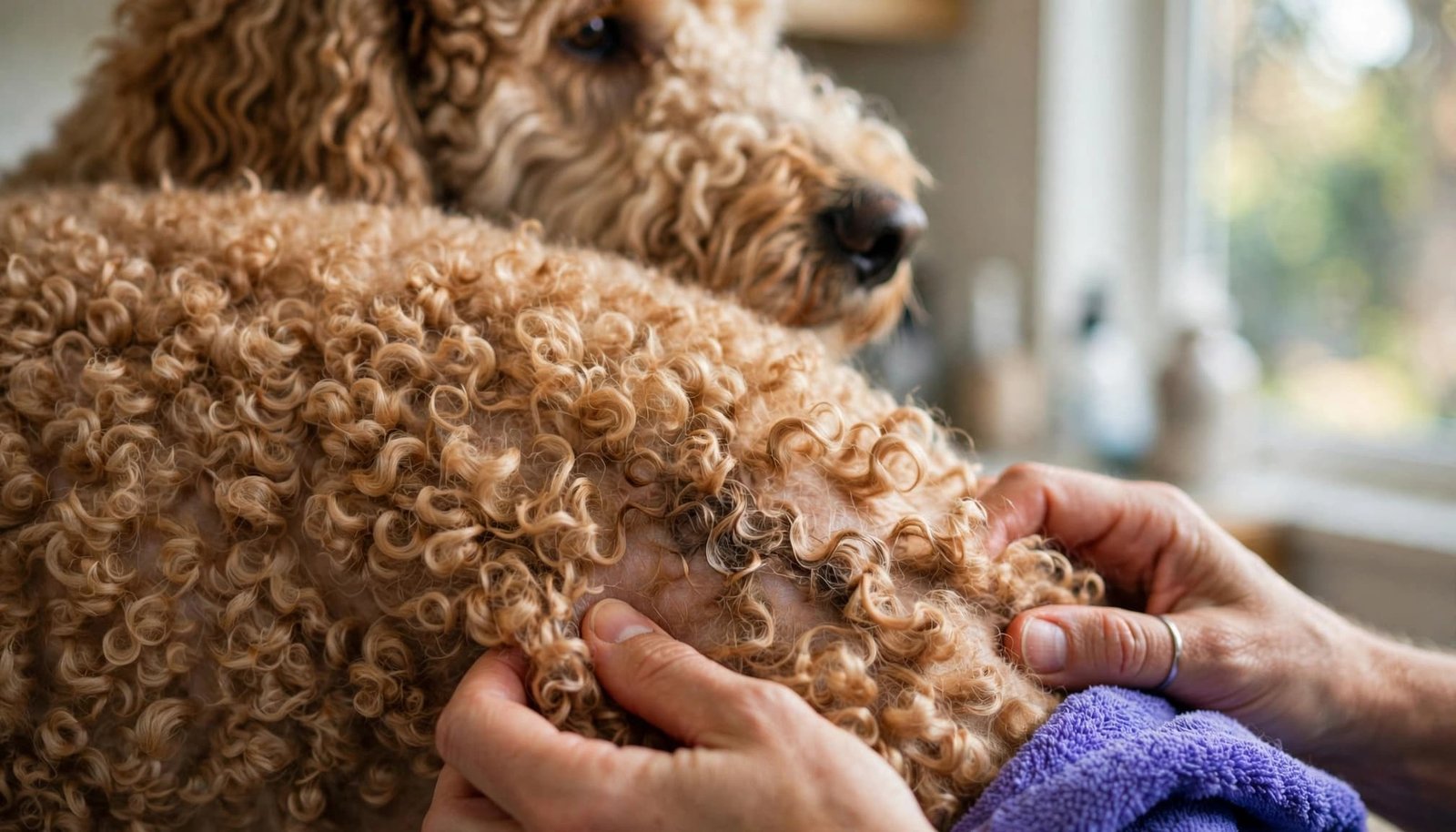
Puppy Fluff Can Hide Changing Maintenance Needs
A soft puppy coat may seem easy to manage, but a coat change can make grooming harder as the adult coat develops. Loose puppy hair can mingle with new growth, so yesterday’s brushing routine may stop keeping tangles under control.
There’s no reliable age for this coat change in every doodle. Instead, watch for changes in texture, increased shedding, or a comb catching more often.
Ask your groomer to reassess the coat when these changes appear. Early advice can help you adjust the haircut and technique before tangles spread.
The Tools You Need to Prevent Doodle Matting
Choose a Slicker That Suits the Coat
For a home dog grooming routine, a suitable slicker brush helps separate hair and remove loose strands. The American Kennel Club’s brush guide identifies slickers as useful for a curly coat and preventing mats.
Pin length and brush size should suit your dog’s coat and body. For line brushing, choose a tool that can reach near the skin during home maintenance. Ask your groomer to demonstrate a suitable brush before buying several expensive options.
Use light pressure. A brush that scratches skin or makes your dog flinch needs a technique or equipment adjustment. Longer pins don’t justify pushing harder.
Add a Metal Comb and Optional Coat Spray
A metal comb, often called a greyhound comb, checks what your brush leaves behind. Wider-spaced teeth can help check loose tangles, while closer teeth provide a finer finishing check when the coat is clear.
A dog-safe detangling spray may reduce friction during maintenance. Follow its directions, including whether it belongs on damp or dry hair. Avoid spraying near the eyes.
Neither spray nor a premium brush makes tight matting safe to remove. Your most useful investment may be a hands-on lesson with a professional groomer.
Line Brushing: Small Sections, Then Check With a Comb
Line brushing exposes one narrow layer at a time. It helps you reach hair near the skin instead of smoothing only the outer curls.
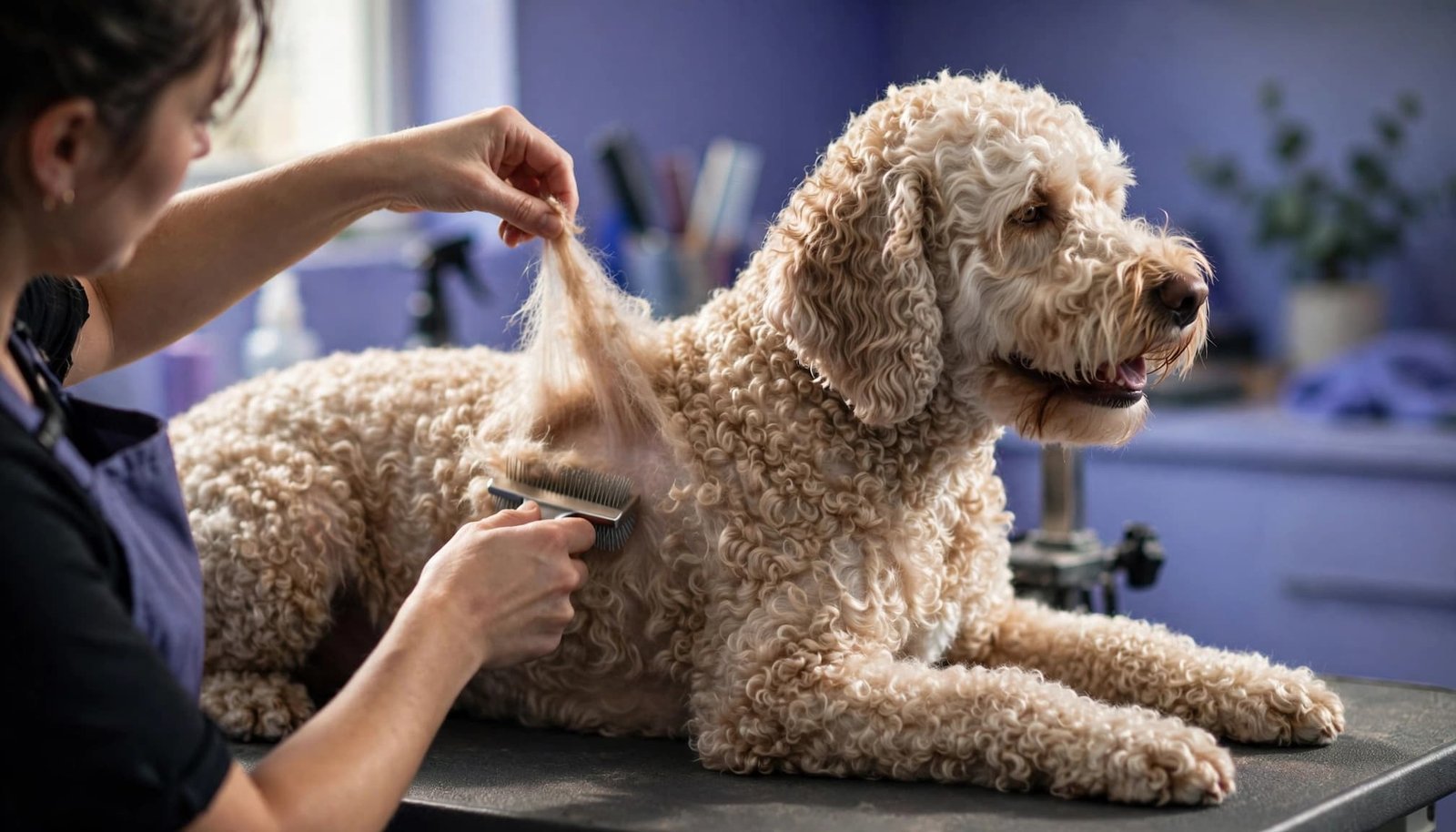
Choose a nonslip surface where your dog can sit or lie comfortably. Start with a manageable area, and keep sessions short enough to help your dog stay relaxed.
- Part the coat with your fingers to reveal a narrow line of skin. Lift the hair above it out of your way.
- Use a slicker brush on the exposed layer, with gentle strokes in the direction the hair grows. Reach the roots without scraping the skin.
- If you find a loose tangle, support the hair near its base and gently separate it. Detangling spray may help, but follow the product directions. Stop if the skin pulls or your dog objects.
- Release another thin layer and repeat the line-brushing process. Thick sections make it easier to miss knots underneath.
- Run a metal comb, such as a greyhound comb, through each finished section, starting near the skin and moving outward. Use gentle pressure, and don’t dig the teeth into the skin.
- Pause when the comb catches. Inspect the spot instead of pulling through resistance, and reward your dog between sections. The comb test should feel easy.
A slicker can glide over a tangled underlayer. The comb check tells you whether you’ve reached beyond the surface fluff.
Ask your groomer to watch your technique if you can’t comfortably reach the roots. Consistent home maintenance works best when you keep sections small, since brushing longer won’t make thick sections easier to check.
Know When a Tangle Needs Professional Help
Loose Tangles Should Separate Without Pain
The matting stages range from loose tangles to compact, felted areas. A minor tangle usually has strands you can distinguish and gently separate. You may be able to loosen it with your fingers, followed by careful brushing and a comb check.
Work slowly, and stop if the hair won’t release easily. Repeated pulling can turn a manageable grooming task into an upsetting experience.
Check areas exposed to rubbing or movement. Behind the ears, under the legs, and beneath a collar are useful places to inspect, but your dog’s trouble spots may differ. Ask your groomer to identify them.
Tight or Felted Hair Needs a Different Approach
Dense mats feel compact, and you may struggle to separate their strands or see the skin beneath them. Larger patches can form a felt-like layer.
Eno Animal Hospital explains matting risks, including pressure on skin, bruising, and vulnerable skin that can tear.
Don’t pull at tight mats or cut them out with household scissors. A skin tight mat can hide folded skin, making its edges difficult to judge. PetMD’s safe mat-handling advice warns about this injury risk.
Contact an experienced professional groomer for help with tight mats. If you notice sores, bleeding, discharge, or marked pain, contact your veterinarian. A close clip may be the kindest option when detangling would hurt.
Manage the Coat Before and After Water
Before a bath, gently check the dry coat with your comb. If you find tight mats, ask your groomer how to proceed rather than washing them first.
Water, movement, and towel rubbing can complicate existing tangles. After swimming or bathing, don’t assume the coat is dry just because its outer surface feels dry.
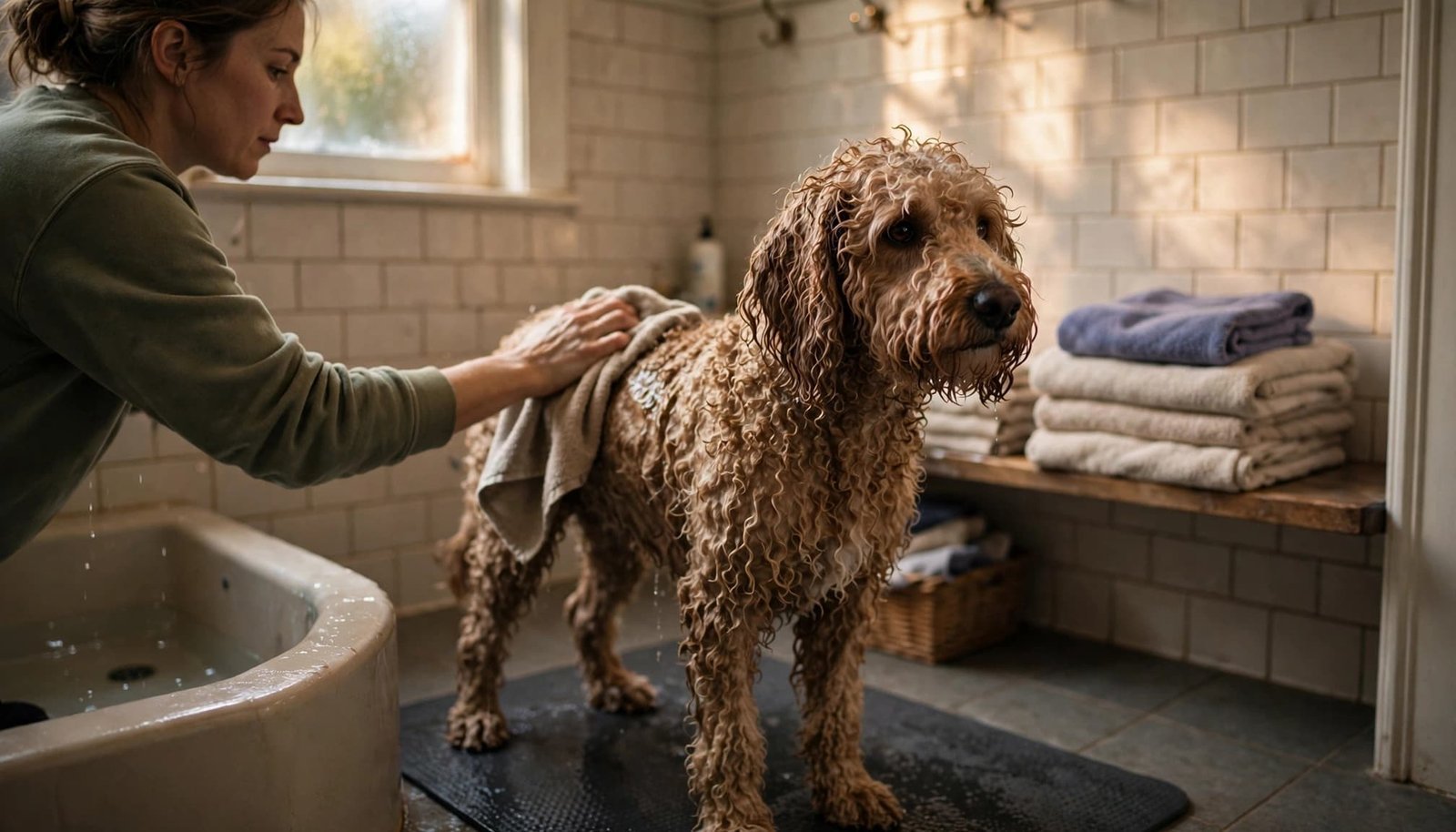
Blot with a towel instead of scrubbing the curls back and forth. If you use a detangling spray, follow its label, then dry thoroughly using a method your dog tolerates safely.
If you use a dryer, avoid hot air and keep airflow away from sensitive areas. Ask your groomer to demonstrate appropriate equipment and introduce the sound gradually.
Once the coat is dry, gently check each section of the dry coat with a greyhound comb. Air-drying doesn’t inevitably create mats, but checking a dense coat while it’s damp is useful home maintenance that can catch tangles early.
Also remove wet walking equipment once you’re safely indoors. Check the compressed hair underneath before replacing it.
Build a Grooming Plan You Can Maintain
Match the Haircut to Your Available Time
Longer coat gives you more hair to separate and inspect. For a teddy bear look, choose a length you can maintain comfortably, not one that repeatedly ends in painful tangles. A coat change can alter what works, so adjust your line brushing routine as your dog’s coat develops.
Plan appointments with a professional groomer around your dog’s coat texture, haircut, activity, and home maintenance. There isn’t one brushing schedule for every doodle. Ask your regular groomer how often your dog needs full brushing and comb checks. They can also advise whether a greyhound comb suits the coat.
Between sessions, briefly inspect the coat and note where tangles return. Keep a simple record of swimming, harness use, and recurring knots. Those details help your groomer prioritize comfort and a manageable coat over a perfectly tangle free look.
Before booking, ask what the quote includes and whether extra tangles affect the price or appointment length.
Make Handling Comfortable at Every Age
Introduce brushing during calm moments. Pair brief, gentle handling with small rewards, then stop before your dog becomes overwhelmed.
Practice touching paws and lifting small coat sections without making every interaction a full grooming session. However, don’t use treats to push through painful brushing.
For multiple doodles, assess each coat separately. Two dogs with similar appearances may need different tools, haircuts, and appointment intervals.
Older dogs may struggle with standing or joint discomfort. Offer a supported position and ask the salon about shorter sessions. Sudden resistance to familiar handling also deserves veterinary attention, especially when pain may be involved.
Key Takeaways
- Brush small layers near the skin, then confirm your work with a metal comb.
- Stop when a tangle pulls the skin or causes discomfort.
- Check the coat before bathing, and dry thoroughly after water exposure.
- Choose a manageable haircut and an individualized grooming schedule.
- Let a groomer handle tight mats, and seek veterinary care for injured skin.
Frequently Asked Questions
Are Doodles Double-Coated Dogs?
“Doodle” doesn’t describe one consistent coat structure. Retriever ancestry and Poodle ancestry can produce varying textures and densities. Have your groomer assess your individual dog before choosing tools, especially equipment intended to remove undercoat.
Do Double Doodles Shed, and Are They Hypoallergenic?
Some Double Doodles shed more than others, and puppies may shed during a coat change as their coats develop. Low shedding doesn’t guarantee allergy compatibility. No dog is guaranteed hypoallergenic, and hair caught inside curls still needs removal to limit tangles.
Can You Prevent Matting Without Brushing Every Day?
Whether daily brushing is needed depends on your dog’s coat. Some coats need much more frequent attention than others, especially when kept long. Use coat checks and your groomer’s assessment to set the routine. If you can’t maintain the current length, discuss a shorter haircut.
Will a Groomer Always Shave a Matted Doodle?
The decision depends on how tight and extensive the mats are, their location, and your dog’s comfort. Loose tangles may be manageable, but dense, skin-tight matting may make clipping or shaving down the coat the safest option. Ask the groomer to show you the affected areas and explain the plan before work begins.
Keep the Coat Comfortable Beneath the Fluff
You prevent doodle matting by reaching the hidden layers, checking with a comb, and responding before tangles become painful. A fluffy surface alone doesn’t tell you whether the coat is clear.
Choose comfort over coat length, and ask for help when brushing stops being gentle. Your next grooming session should leave your dog comfortable, with a coat you can realistically maintain.