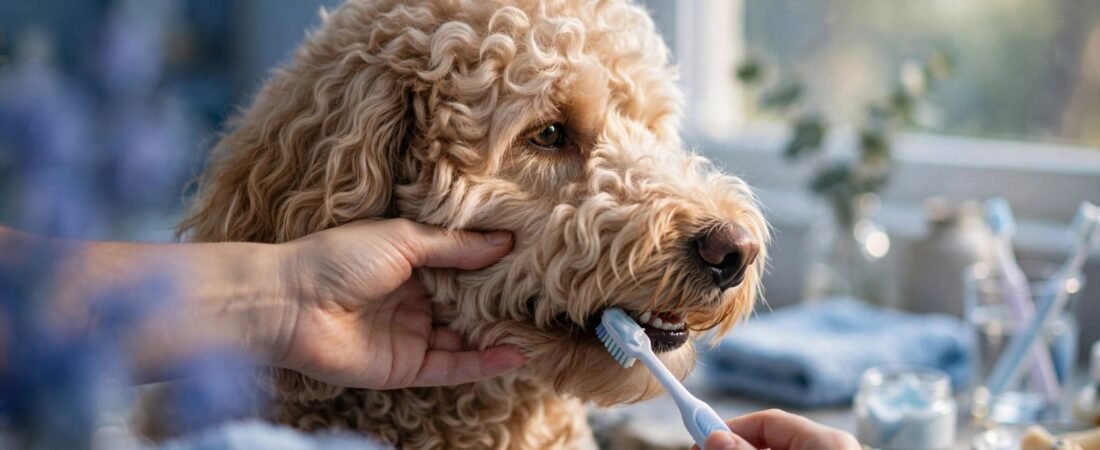
Double Doodle dental care starts with daily brushing using dog-safe toothpaste, plus regular veterinary mouth checks. Dental chews can help, but they can’t replace a toothbrush or treat painful teeth.
You don’t need a bathroom full of products to get started. You need short, comfortable sessions and a routine that fits your dog’s age, health, and tolerance.
Start with a few supplies, then build handling skills before attempting a full tooth-cleaning session.
Key Takeaways
- Clean your dog’s teeth daily when possible; if that’s unrealistic, aim for at least three to four sessions weekly.
- Choose canine toothpaste and appropriately sized dental products with the VOHC Accepted seal.
- Stop brushing painful areas and seek veterinary care for bleeding, broken teeth, swelling, or persistent bad breath.
Understand Your Double Doodle’s Dental Risks
VCA estimates that more than 85% of cats and dogs over four have periodontal disease. This affects the tissues supporting teeth and can cause infection and tooth loss.
That estimate isn’t Double Doodle-specific, so your veterinarian should assess your dog’s individual dental health.
Smaller Mouths Can Need More Attention
Toy and Miniature Poodles can face crowding and periodontal problems, and smaller Doodle mixes may share these concerns. However, Poodle ancestry alone doesn’t predict your dog’s dental health.
Ask your veterinarian to assess crowding, bite alignment, and retained baby teeth. Our Double Doodle wellness guide puts dental care alongside other preventive habits.
A Clean Beard Doesn’t Mean Clean Teeth
Long muzzle hair can hide drool, food residue, and changes around the lips. Keep it clean and dry as part of your Doodle bathing and drying routine.
However, washing the beard doesn’t remove dental plaque. Lift the lips gently so you can actually see the teeth and gum margins.
Gather a Small, Safe Dental Kit
A soft toothbrush and canine toothpaste handle most home care. Keep dental wipes or gauze available as a backup rather than buying several overlapping products.
Choose Toothpaste Made for Dogs
Canine toothpaste is designed for swallowing and often comes in poultry or seafood flavors. Choose one your dog willingly accepts.
Human toothpaste contains cleaning agents, including abrasives and detergents, formulated for people who spit it out. Some formulas also contain xylitol, which is toxic to dogs.
VCA’s guidance on cleaning your pet’s teeth warns against human toothpaste and baking soda.
Match the Brush to Your Dog
Use a small, soft-bristled dog toothbrush that reaches comfortably behind the lips. A finger brush can help during introductions, but a long-handled brush keeps your fingers farther from teeth.
For multiple Doodles, give each dog a separate toothbrush. Replace brushes when the bristles become worn or damaged, and rinse them after use.
Help Your Dog Accept Mouth Handling
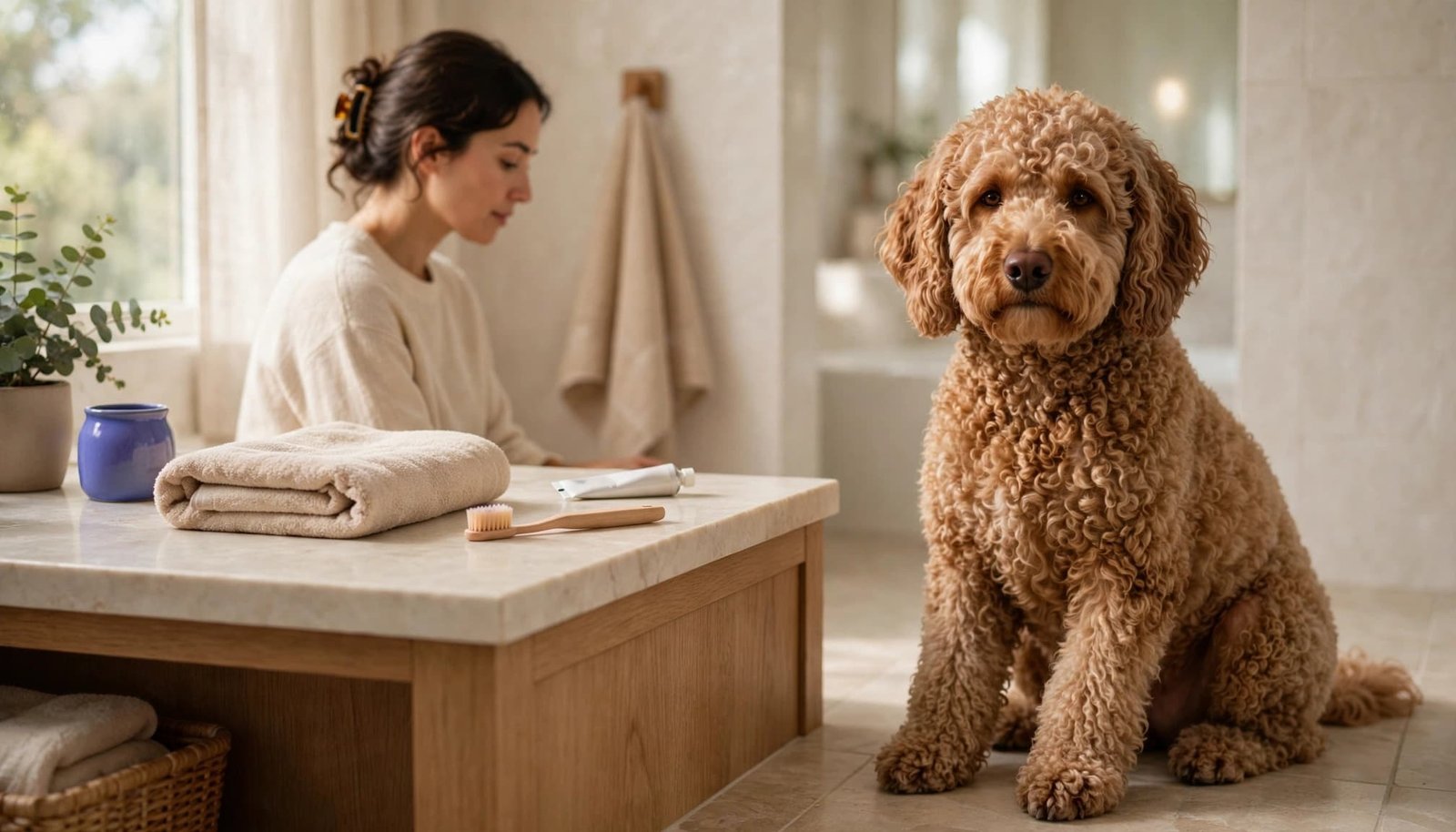
Acceptance can take several days to several weeks. Progress depends on your dog’s comfort, so avoid holding the muzzle shut or forcing the mouth open.
Begin With Touch and Taste
Choose a quiet moment and briefly touch your dog’s cheek, then reward and release. Next, practice lifting one lip for a second.
Let your dog lick canine toothpaste from a finger or brush. Tiny amounts of xylitol-free peanut butter, onion-free and garlic-free meat baby food, or plain nonfat yogurt can also introduce gentle handling if tolerated.
Our puppy handling and socialization guidance follows the same approach: brief contact, rewards, and gradual progress.
Introduce Just a Few Teeth
Once lip lifts feel comfortable, touch the brush to one or two outer teeth. End before your dog starts pulling away.
After several comfortable sessions, add more teeth and a little duration. If your dog freezes, growls, snaps, or suddenly resists, stop; pain or fear needs attention before more practice.
For persistent handling difficulties, involve your veterinarian and a qualified reward-based trainer.
Follow This Simple Daily Brushing Routine
Choose a predictable time, such as after the evening walk, to make oral hygiene part of your dog’s day. Daily brushing is ideal because plaque builds up continually; three to four times weekly is a practical fallback, not equal protection.
Work toward cleaning the outer surfaces throughout the mouth, but let comfort determine how quickly you get there.
- Settle your dog on a nonslip surface. Sit beside them rather than leaning over their head.
- Lift one lip gently while keeping the jaw relaxed. You usually don’t need to open the mouth wide.
- Place the soft bristles where the tooth meets the gum line. Use light pressure and small circular motions.
- Begin with easy-to-reach teeth. After several successful days, gradually include the back teeth on both sides.
- Finish with praise and a small reward. Rinse the brush and store it where it can dry.
Focus first on the outer tooth surfaces, where plaque and periodontal problems commonly develop. Cleaning the inside is optional when reaching it would cause struggling or unsafe handling.
On rushed days, canine dental pads or damp gauze can wipe accessible outer surfaces. These are a fallback, not equivalent replacements for a thorough tooth-cleaning session, and fingers should stay away from a mouth that may bite.
Don’t scrape hardened tartar with home dental tools. You can injure gums or damage teeth without treating disease beneath the gum line.
Choose Dental Chews Without Buying Into Every Claim
Look for the VOHC Accepted seal, often loosely called “VOHC-approved.” It means the product met Veterinary Oral Health Council requirements for its specific claim to reduce plaque and tartar, or either one.
The VOHC accepted-products list identifies the accepted product and claim. Acceptance applies to individual products, not every item from a brand. Chew toys aren’t automatically effective dental products, so check the exact product’s claim.
These common options have different limitations.
| Product | Useful Features and Safety Points |
|---|---|
| Milk-Bone Brushing Chews | Contain added vitamins and minerals; their chewing action helps reduce plaque and tartar. Choose the correct size. |
| GREENIES Dental Treats | Original Greenies contain wheat, so they’re not grain free. Senior options are available, but softer texture doesn’t guarantee safety for damaged teeth. |
| Blue Buffalo Dental Bones | Marketed without wheat, corn, or soy, but that doesn’t mean they’re grain free. Check the current Blue Buffalo label. Don’t assume dental chews also supply glucosamine or chondroitin for joint support. |
| Himalayan Yak Cheese chews | Durable but very hard. They’re a poor choice for sensitive mouths and can fracture teeth. Skip them if your dog has a damaged tooth or mouth pain. |
Dental chews and some crunchy dental treats can reduce buildup, but ordinary crunchy biscuits aren’t automatically effective dental products.
Avoid hooves and steak, rib, or ham-shank bones. A knucklebone isn’t reliably tooth-safe, even when described as softer, and can fracture teeth. Raw bones also carry bacterial risks.
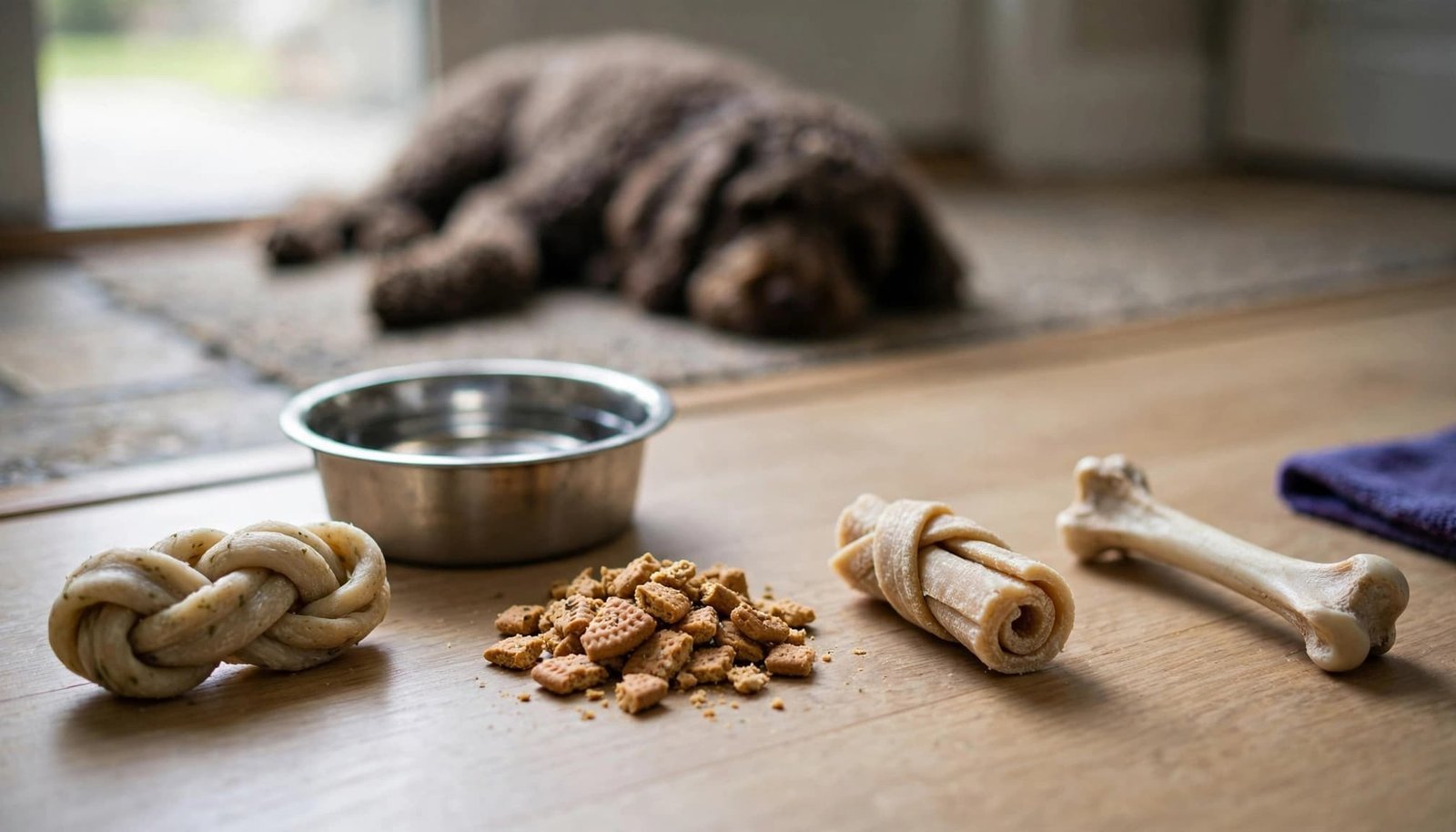
Rawhide can pose choking or blockage risks, especially when dogs swallow large pieces. Supervise every chew and count all treats, including Milk-Bone chews, within roughly 10% of daily calories.
Notice Problems Before They Interrupt Meals
While lifting your dog’s lips, look for red gum margins, bleeding, heavy brown deposits, broken teeth, or a loose adult tooth. Persistent bad breath also deserves attention.
Watch behavior as well as appearance. Dropping food, chewing on one side, pawing at the mouth, or resisting face handling can signal discomfort.
The American Kennel Club includes foul breath and bleeding gums among signs of oral disease. Your dog may keep eating despite dental pain, so appetite alone doesn’t rule out trouble.
Arrange a veterinary appointment for these changes rather than pressing harder. Seek urgent care for facial swelling, uncontrolled bleeding, significant mouth trauma, or difficulty breathing or swallowing.
If your dog seems painful, pause home tooth cleaning until your veterinarian advises you.
Plan for Professional Dental Care
Home care slows plaque accumulation, but it can’t remove established tartar below the gums or diagnose hidden tooth disease.
Schedule Exams Around Individual Need
Include an oral examination in your dog’s veterinary checkup at least annually. Smaller mouths, previous periodontal disease, and other findings may justify more frequent assessments.
The timing of professional dental cleanings and other dental procedures depends on your veterinarian’s findings, not a fixed Double Doodle schedule. Your veterinarian may recommend referral to a veterinary dentist for complex extractions, jaw problems, or tooth-saving treatment.
Understand Anesthesia and Preparation
A complete veterinary dental cleaning requires general anesthesia. AAHA’s dental-cleaning planning guidance explains the importance of anesthesia and airway protection.
The procedure generally includes examination, dental X-rays, gum-pocket assessment, scaling above and below the gums, and polishing. Diseased teeth may need additional treatment or extraction.
Before the appointment, discuss medications, previous anesthetic problems, and existing illnesses. Follow the clinic’s individual fasting and medication instructions rather than assuming every dog should skip food or regular medicine overnight.
Ask what the estimate includes and how the team will handle additional findings. Afterward, follow the prescribed pain-control, feeding, and tooth-cleaning restart plan.
Frequently Asked Questions
When Should You Start Brushing Puppy Teeth?
Begin gentle lip handling and toothpaste introductions early, without forcing a full session. During teething, avoid brushing tender or bleeding areas.
Your veterinarian should assess retained baby teeth or unusual tooth positions rather than leaving you to pull teeth at home.
Does Dry Kibble Clean Your Dog’s Teeth?
Ordinary kibble doesn’t replace a home tooth-cleaning routine. Some purpose-made dental diets have evidence for plaque or tartar control, but a crunchy texture alone doesn’t establish a dental benefit.
Choose a complete diet appropriate for your dog’s life stage, then treat dental care as a separate daily habit.
Build a Routine Your Dog Can Trust
Effective Double Doodle dental care depends on consistent, comfortable tooth cleaning, sensible chew choices, and timely veterinary treatment. More products won’t compensate for a painful mouth or rushed handling.
Start with one calm lip lift and a reward tonight. Build toward daily brushing at your dog’s pace, and treat changes in breath, gums, or chewing as reasons to seek help.