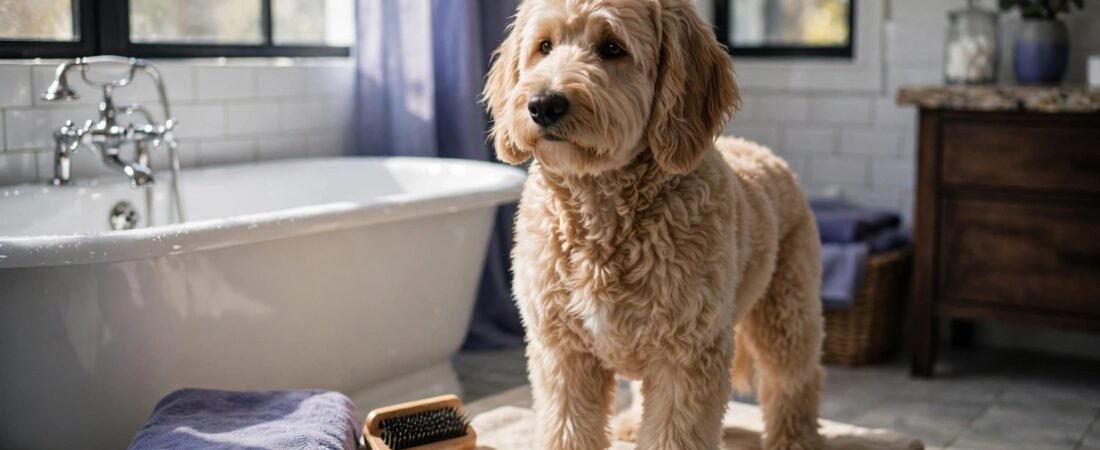
You can usually bathe your Doodle about once a month, although many wavy or curly coats suit a four-to-six-week interval. Your dog’s coat length, activity, and skin health matter more than a fixed calendar.
If you’re wondering how often to bathe a Doodle, start with a reasonable interval and watch how the coat feels between washes. A clean, comfortable dog may need brushing rather than another wash, so use the schedule below as your starting point.
Key Takeaways
- Start around monthly, then adjust for your dog’s individual coat and skin.
- Comb-check before bathing because existing tangles can tighten and become harder to remove.
- Dry thoroughly after water exposure, including beneath the outer fluff.
- Treat persistent odor, itching, redness, or bald patches as reasons for veterinary care rather than repeated washing.
How Often Should You Bathe a Doodle by Coat Type?
Your Goldendoodle, Labradoodle, Bernedoodle, or Double Doodle doesn’t inherit one predictable coat. A Goldendoodle’s coat texture and bathing needs can vary, even within the same household. Textures range from a Poodle coat to a straighter one, and no coat type guarantees a dog will be hypoallergenic.
Use these intervals as starting points for a healthy dog without a prescribed skin-care plan.
| Coat Type | Starting Bath Interval | What Changes the Plan |
|---|---|---|
| Curly coat (Poodle-like) | Every 4 to 6 weeks | Length, trapped debris, tangles, and skin comfort |
| Wavy coat | Every 4 to 6 weeks | Outdoor activity and how easily you can comb through it |
| Straight coat, easier to maintain | About every 6 to 8 weeks | Greasiness, dirt, odor, and skin condition |
Straighter coats may go about two months between baths, while some active dogs need washing every three to four weeks. Coat texture alone doesn’t decide the answer.
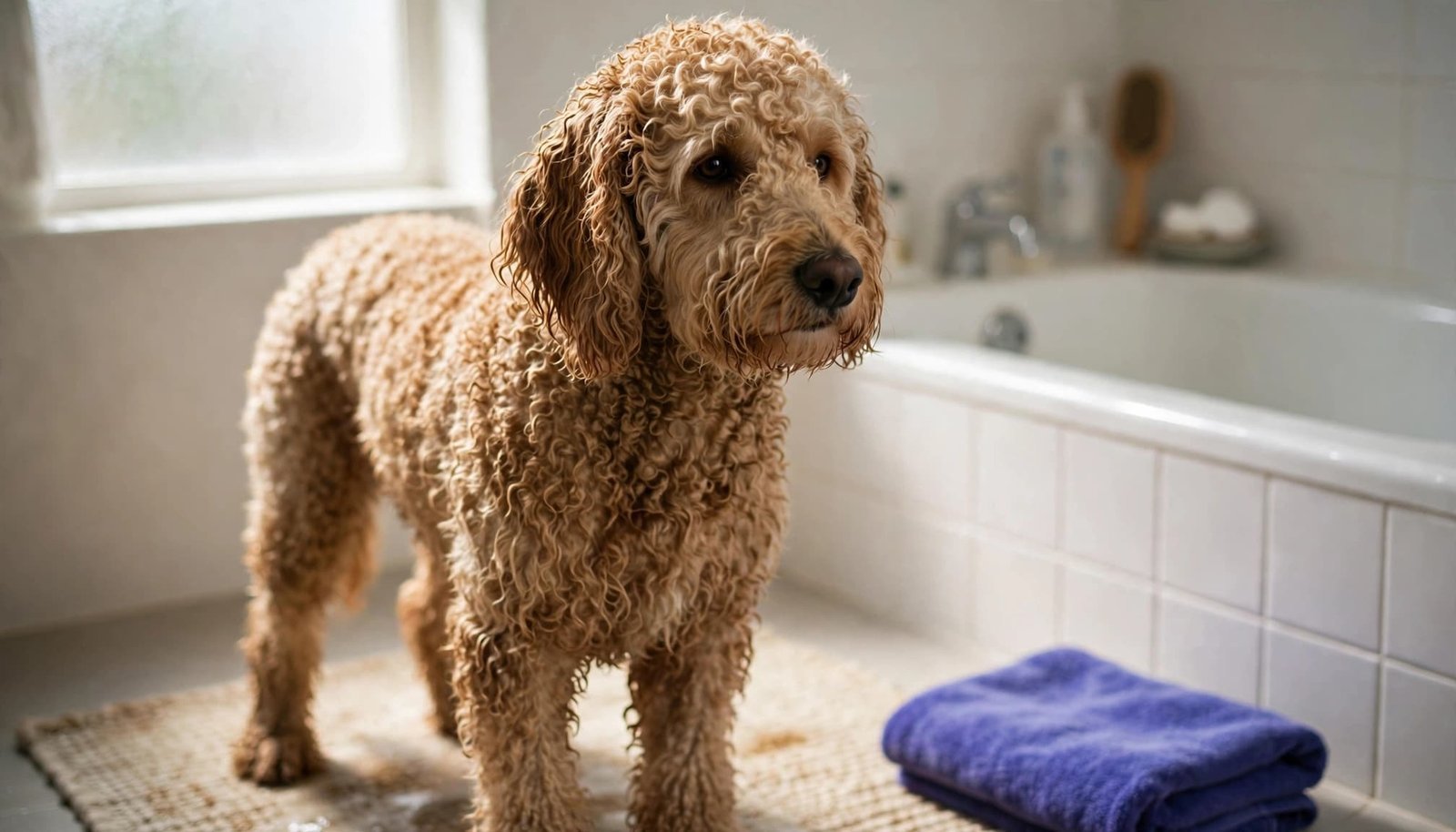
Frequent washing with harsh products can cause dry skin and remove protective oils. However, washing more than monthly isn’t automatically harmful when you use suitable products and follow an individualized plan.
Virginia Tech’s safe bathing guidance explains that oils form part of the skin’s protective barrier. A veterinarian may prescribe a different bathing schedule for a diagnosed condition.
Decide Whether Your Dog Needs a Bath or Brushing
Dry dirt, loose hair, and small tangles often call for coat maintenance first. If brushing removes the debris and the skin looks comfortable, you may not need a full wash.
Low shedding doesn’t guarantee a hypoallergenic dog, since allergens can also come from a dog’s skin and saliva.
By contrast, widespread grime, a greasy feel, or something smelly coating the hair usually calls for washing. A damp cloth can handle a muddy paw or small patch without soaking your whole dog.
A comb catching near the skin tells you the coat needs attention, but it doesn’t automatically mean your dog needs washing.
Dog-safe waterless shampoo can help with minor freshening between washes. However, it doesn’t reliably remove everything your dog might roll in, and it shouldn’t hide a persistent smell.
Recurring odor, excessive scratching, redness, bald patches, or unusually heavy shedding deserve veterinary attention. Allergies are among the most common causes of canine skin disease, but these signs don’t establish a diagnosis.
Cornell’s atopic dermatitis guidance describes redness and hair loss associated with scratching and licking. Ask your vet whether the problem needs testing or a medicated bathing plan.
Prepare the Coat Before Turning on the Water
Brush and Comb Before the Bath
Work through the dry coat in small sections with a suitable brush, then follow with a metal comb. Check behind the ears, under the legs, and beneath the collar.
Water, movement, and towel friction can tighten existing tangles until gentle removal becomes difficult. Dense mats may need professional clipping, so don’t wash them first or cut them with household scissors.
Our guide to preventing Doodle matting explains how to check beneath the fluffy surface. Stop if brushing pulls the skin or hurts your dog.
Choose Shampoo for Skin Needs
Use a mild shampoo labeled for dogs as part of a gentle grooming routine, and follow its directions for dilution and contact time. Human shampoo has a different formulation and can irritate or dry canine skin.
Strong cleansers, silk-protein formulas, and 2-in-1 shampoo-conditioners are options, not requirements tied to retriever-like, curly, or wavy coats. A stronger cleanser isn’t automatically better for a dirty dog. Avoid applying essential oils directly or using homemade blends unless your veterinarian recommends them.
Choose a dog-safe conditioner if the coat needs it, following the label. Our guide to Doodle brushes and combs can help you assemble a small, useful kit without buying every grooming accessory.
Wash, Rinse, and Dry Without Adding Tangles
Keep the Bath Calm and Thorough
Gather your cleanser, towels, and treats before bringing your dog into a nonslip bathing area. Use comfortably lukewarm water and gentle handling.
- Wet the coat through to the skin, keeping the spray away from the eyes and ear canals.
- Apply dog shampoo as directed, then gently work it through the coat without scrubbing tangles together.
- Rinse carefully, including the belly, armpits, and between the legs, until no suds remain.
- Use conditioner if appropriate, then rinse or leave it in only as its label directs.
The AKC’s home grooming guidance also recommends warm water and mild dog shampoo. For the face, use a damp cloth rather than directing spray toward sensitive areas.
Don’t add essential oils to bathwater unless your veterinarian recommends a specific dog-safe product.
Blot First, Then Dry the Hidden Layers
Press or blot with an absorbent towel instead of rubbing curls back and forth. The surface may feel dry while dense hair near the skin still holds moisture.
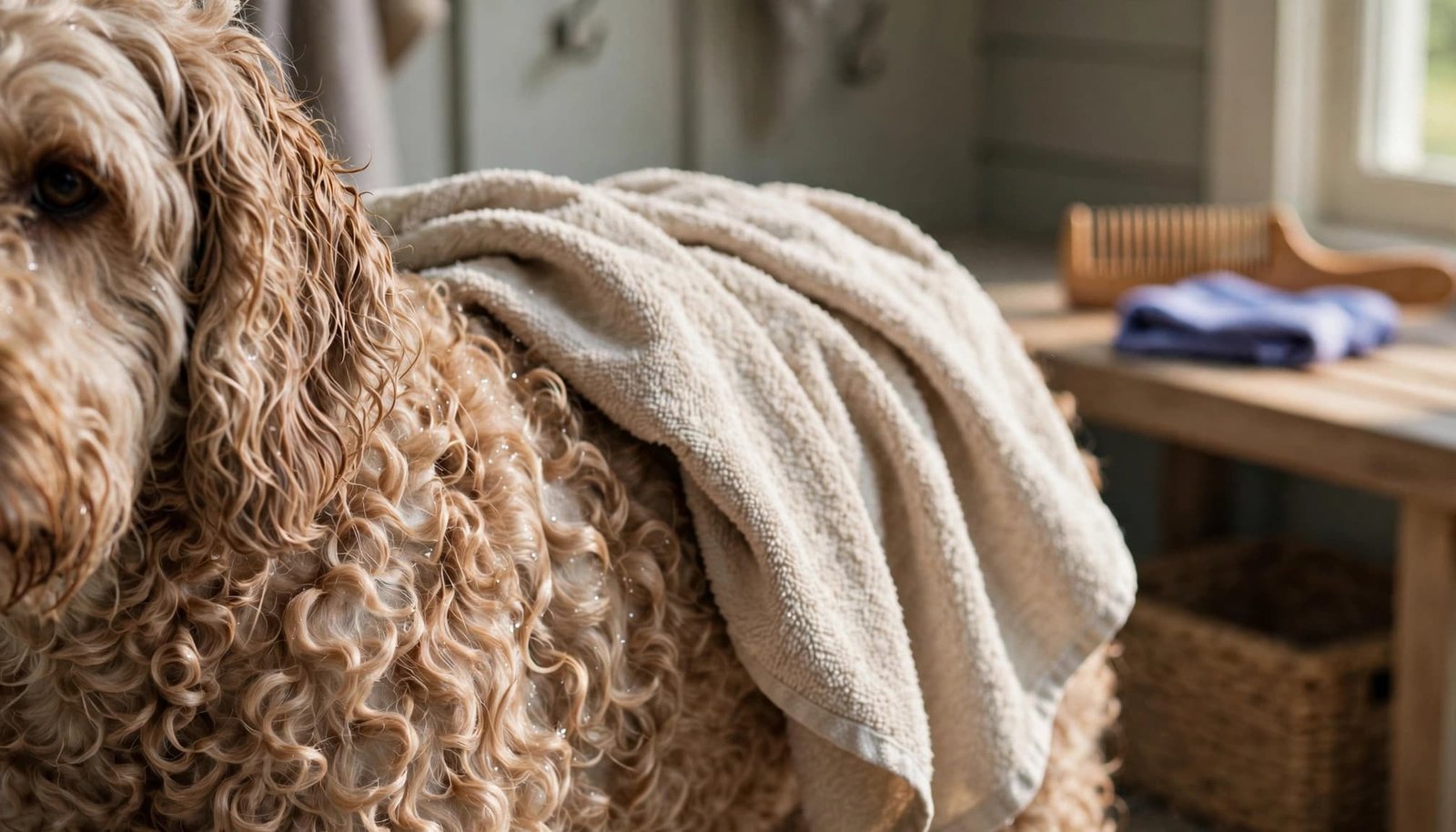
If you use a dryer, avoid hot air and direct airflow away from sensitive areas. Ask your groomer to demonstrate appropriate equipment, then introduce its sound gradually.
For home maintenance, avoid dragging a brush through soaking-wet hair. Once the coat is dry, gently brush and comb-check each section.
Air-drying doesn’t inevitably cause mats, but don’t assume the underlayers have dried because the outer curls feel dry. Remove wet harnesses or collars once safely indoors and inspect the compressed hair underneath.
Build a Weekly-to-Monthly Grooming Routine
Keep Home Care Short and Consistent
Aim to inspect the coat daily and brush long or dense curls daily when needed. Three to four thorough sessions weekly may suit an easier-maintained coat, but your comb checks should guide you.
Brushing removes loose hair and helps prevent knots; it doesn’t stop normal shedding. Even a low-shedding Doodle can retain loose strands inside the curls.
Start with a brief session your dog tolerates comfortably rather than a fixed time target. A large dog or long coat may need several short sessions to cover the whole body.
Check nails weekly to plan nail trimming. Some dogs need small trims every week or two, while others need longer intervals based on nail growth and wear.
Also brush teeth daily with dog toothpaste. These small grooming habits matter between washes.
Schedule Haircuts Around What You Can Maintain
Plan haircuts roughly every four to eight weeks, with a professional bath, brush, and cut commonly scheduled every 6-8 weeks. A Goldendoodle’s coat length and growth affect haircut timing, and longer styles may need closer attention.
Ask your professional groomer three practical questions: Which areas tangle first, what length suits your home routine, and does the salon’s bath replace that month’s home wash? This helps prevent unnecessary duplicate washing.
If your puppy struggles with handling, use our guidance on introducing grooming to puppies. Brief, rewarded practice works better than pushing through fear or painful brushing.
Give Ears Their Own Care Plan
After every bath or swim, gently dry the visible outer ear and surrounding coat. Don’t push towels, cotton swabs, or Q-tips into the ear canal.
Doodles with floppy ears can develop ear infections, but floppy ears don’t make infections inevitable. Ear shape alone doesn’t tell you how often to use cleaner.
VCA’s ear-cleaning instructions for dogs explain why cotton swabs can cause trouble. Ask your veterinarian whether your dog needs ear cleaning weekly, after water exposure, or on another schedule.
If you notice odor, redness, discharge, head shaking, or pain, arrange veterinary care before continuing routine cleaning. Repeatedly adding cleaner won’t address every cause and may make a sore ear harder to handle.
For a dog with recurring ear infections, ask which product to use, how much to apply, and when cleaning should stop.
Frequently Asked Questions
How Often Should I Bathe My Doodle?
Weekly bathing may be appropriate under a veterinarian’s treatment plan, but it’s usually unnecessary for routine cleaning. If your dog seems dirty or smelly every week, review the cause, product choice, rinsing, and drying routine instead of automatically adding more baths.
Why Does Your Doodle Smell Soon After Bathing?
Possible reasons include incomplete drying, product residue, dirty bedding, or an ear or skin problem. Dry the hidden coat layers and wash bedding regularly, but seek veterinary care if the smell keeps returning or comes with itching, redness, discharge, or discomfort.
Is a Doodle Hard to Groom as a First-Time Owner?
You can learn the routine, but a dense, long coat takes regular work. A shorter haircut and a hands-on brushing lesson can make maintenance more manageable, while a comb helps you find tangles that a surface brush misses.
Choose a Schedule You Can Maintain
Start around monthly, then adjust how often you bathe your Doodle based on coat condition and skin comfort. Keep gentle brushing and thorough drying between washes, because cleansing alone won’t prevent matting.
Before the next bath, comb-check the dry coat and address tight mats with your groomer. Choose a coat length and routine you can maintain comfortably, then let your dog’s needs guide the calendar.