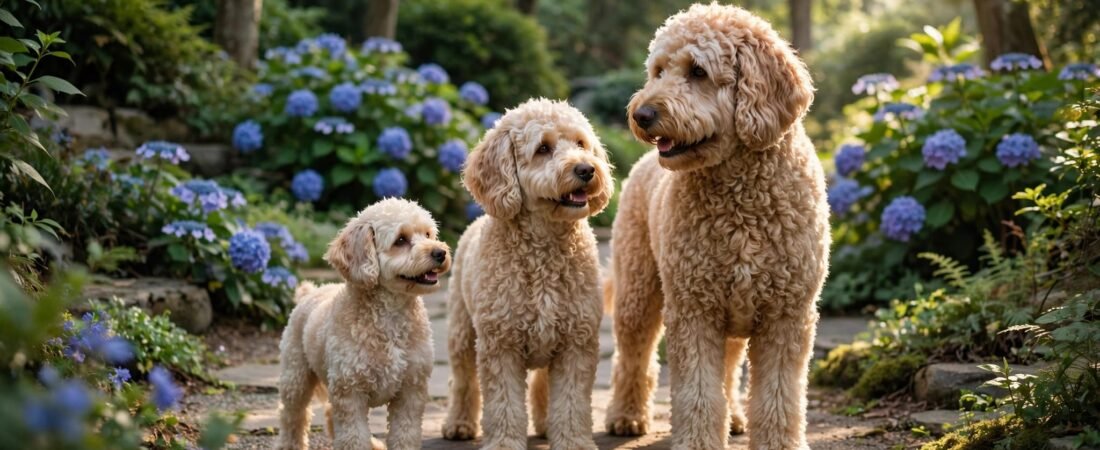
A standard Double Doodle usually reaches 50 to 80 lbs and stands 20 to 29 inches tall at the shoulder. Compact variations generally weigh under 30 lbs, while medium dogs fall between smaller and standard sizes.
However, Double Doodle size labels aren’t standardized, so treat them as planning ranges, not promises. Your puppy’s parents, family history, and growth pattern give you a clearer picture of your future family pet than the miniature label on an advertisement.
Start with the size chart, then consider what those measurements mean for your home and daily routine.
Key Takeaways
- Standard Double Doodles commonly weigh 50 to 80 lbs, but smaller lines vary widely.
- Both parents’ measurements and mature relatives offer better clues than a seller’s size label alone.
- A small Double Doodle still needs exercise, training, and regular coat care.
- Healthy growth matters more than reaching a particular number on the scale.
Double Doodle Size Chart: Mini, Medium, and Standard
These commonly published estimates help you compare adult size, but they aren’t official breed limits.
| Size Label | Estimated Adult Mass | Estimated Shoulder Stature | Activity Planning |
|---|---|---|---|
| Compact | Generally under 30 lbs | Often 16 to 18 inches | Daily walks, play, and training |
| Medium | Commonly 20 to 45 lbs | Roughly 17 to 20 inches | Regular active outings and enrichment |
| Standard | Over 45 lbs; commonly 50 to 80 lbs | Commonly 20 to 29 inches | An active lifestyle and room to move |
A mini double doodle typically stays on the lighter end of the scale. In contrast, a medium double doodle bridges the gap between toy lines and standard builds. Breeder labels overlap, so check the parents’ adult size and your puppy’s growth chart.
Wag’s Double Doodle breed chart lists 50 to 80 lbs and 20 to 29 inches for both sexes. That’s a useful standard-size reference for a double doodle, rather than a prediction for every puppy.
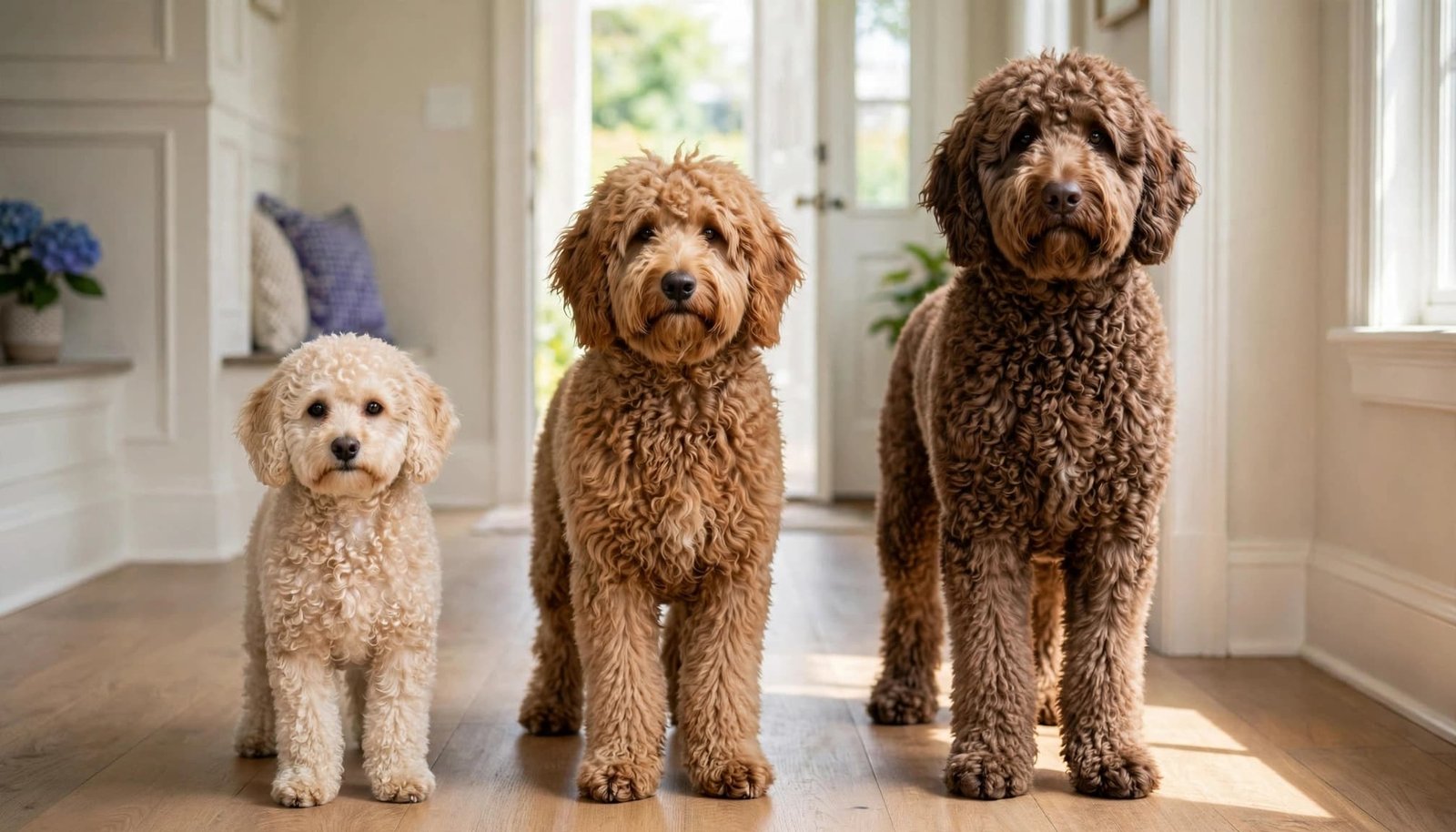
A Poodle-influenced build can give a lighter dog relatively long legs. A scale reading alone won’t tell you whether your future companion can comfortably fit a carrier, crate, or small car.
Coat volume can also make two dogs with similar measurements look different in photographs.
Why Adult Size Varies So Much
Parentage Matters More Than the Name
A Double Doodle traditionally combines a Goldendoodle with a Labradoodle, though some breeders colloquially call the hybrid a “golden labradoodle.” Some pair a multi-gen labradoodle with a Goldendoodle, which can produce a different ancestry mix.
When both parents are first-generation crosses, the expected ancestry is roughly 50% Poodle, 25% Golden Retriever, and 25% Labrador Retriever.
Those percentages don’t divide body size into neat portions. Size depends on many genes, and additional generations or backcrosses can change the ancestry.
Some sellers also use “Double Doodle” for other doodle crosses. Our guide to Double Doodle parent breeds explains why the family tree matters.
Family Measurements Improve Your Estimate
The Poodle varieties in the background make a major difference. Standard, Miniature, and Toy Poodles contribute very different size expectations.
Look at both parents’ adult weights and shoulder heights, plus mature dogs from previous litters. Littermates can still finish at different sizes, and males aren’t automatically larger than every female.
Whether evaluating a golden double doodle or another coat color, physical stature depends on ancestral genetics, not shade. Many owners hope for a low-shedding or hypoallergenic coat, but allergen levels and shedding vary widely by individual pup.
The mix’s exact origin isn’t well documented. Claims placing its beginnings in the United States during the 1970s or 1980s don’t establish a reliable breed history or size standard.
Tiny Labels Need Extra Care
“Teacup,” “petite,” and “micro” usually describe dogs marketed as smaller than a standard miniature pup. These aren’t regulated categories.
You may encounter claims that Double Doodles cannot naturally weigh under about 20 lbs. That’s not an established biological cutoff, but breeding repeatedly for extreme smallness without prioritizing health can pass on serious health risks.
Small dogs can develop patellar luxation, a displaced kneecap. Limping or repeated skipping warrants veterinary assessment, regardless of a “tiny” label.
When Double Doodles Stop Growing
Height Usually Settles Before Body Shape
Smaller dogs often approach their adult frame around 10 to 12 months. Larger Double Doodles may continue growing taller into roughly 12 to 18 months.
These are general canine growth patterns, not validated Double Doodle milestones. Your veterinarian can judge your puppy’s progress using repeated measurements and physical examinations.
A puppy’s oversized paws won’t give you a dependable estimate of adult mass. Likewise, multiplying one early weight by a fixed number can miss the mark when the ancestry includes several sizes.
Filling Out Can Continue After One Year
Your dog may reach its adult frame before developing a broader chest and adult muscle. Larger individuals can continue filling out into their second year.
However, every extra pound after the first birthday isn’t normal growth. A disappearing waist or ribs that become difficult to feel can signal excess body fat.
A rising scale number can reflect growth or excess bulk. Your dog’s body condition helps you tell the difference.
Keep dated measurements so your veterinarian can assess the pattern, rather than one isolated weigh-in.
How to Measure and Track Your Dog
You can collect useful measurements at home without turning your hallway into a veterinary clinic.
- Measure your dog’s shoulder stature while they stand naturally on a level, nonslip floor. Measure vertically to the withers, the highest point between the shoulder blades, rather than the head.
- Use the same scale when possible. For a small dog, step on the scale while holding them, then subtract your mass; larger dogs usually need a veterinary or pet scale.
- Record the date, age, scale figure, and shoulder measurement together. Monthly records during puppyhood are more useful than frequent measurements taken under different conditions.
Keep your dog relaxed, and don’t force a prolonged standing position. If handling causes pain or distress, let your veterinary team help.
Feel through the coat when assessing body condition. You should generally feel the ribs beneath a light covering and see a waist when looking down from above.
How Size Changes Your Daily Routine
Exercise Depends on More Than Body Size
A healthy adult Double Doodle may need around an hour of daily exercise as a starting estimate. Adjust that amount for health, fitness, weather, and your individual dog’s energy.
A compact pup can be lively and demanding. Standard dogs need enough room to move comfortably and an owner who can manage a larger, stronger companion.
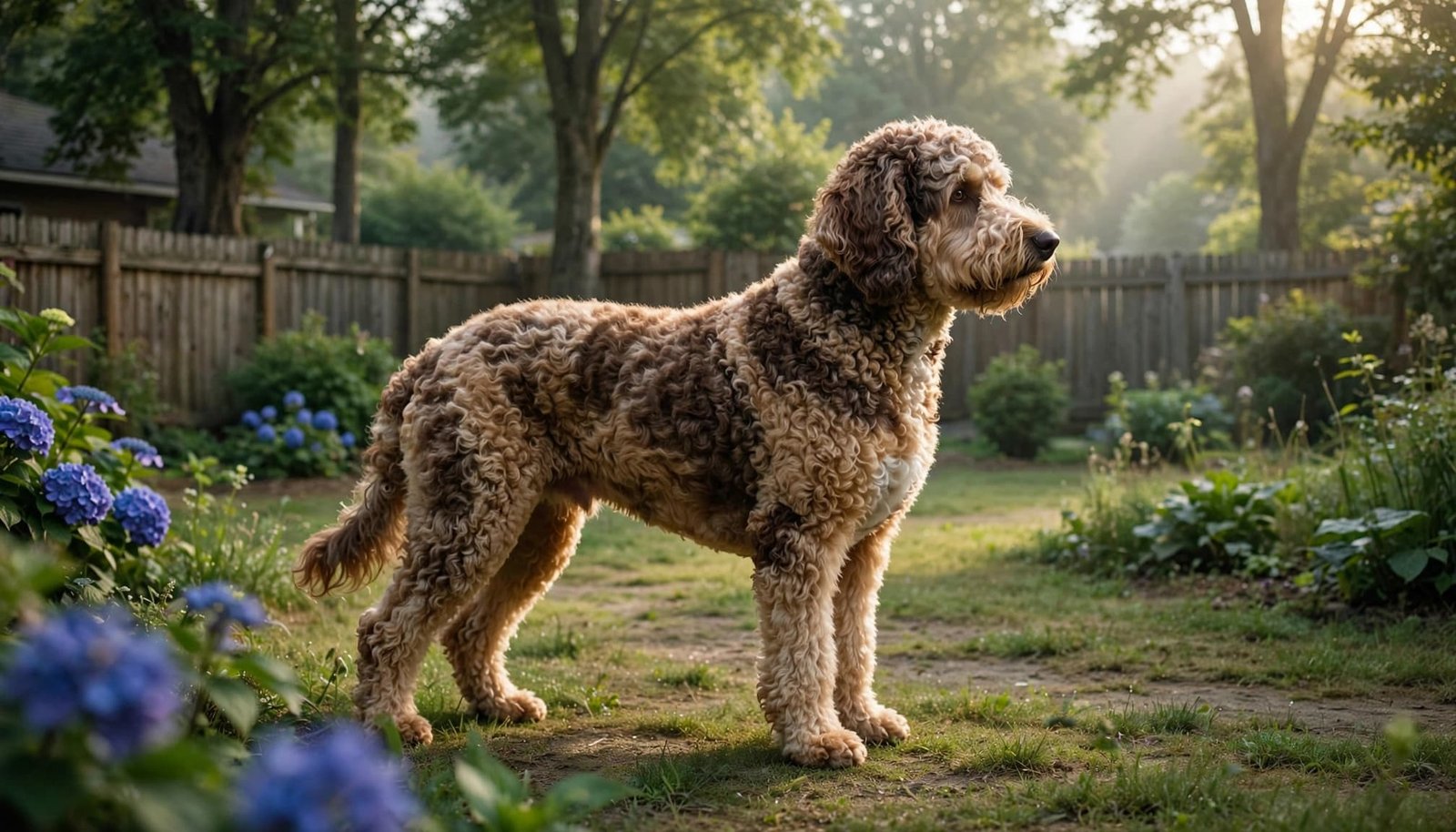
Both standard and smaller companions have lively physical energy that needs a daily outlet. Channel that mental energy into puzzle toys to help prevent boredom.
A large yard is helpful, but planned walks, sniffing outings, and training still matter. Apartment living can work for a Doodle when you can meet those needs consistently.
Puppies need shorter, age-appropriate activity and plenty of rest. Discuss repetitive running or high-impact exercise with your veterinarian before starting.
Feeding and Grooming Need Individual Plans
Choose a complete puppy food appropriate for your dog’s expected adult size. If your puppy is likely to become large, discuss a large-breed growth formula with your veterinarian.
Don’t restrict food to keep a puppy “mini,” and don’t add calcium supplements unless prescribed. Feed for steady growth and healthy body condition.
Larger dogs generally need more food, but smaller dogs don’t automatically need less grooming. Coat texture and haircut drive maintenance, so use our guidance on preventing painful Doodle mats rather than assuming a compact pup has an easier coat.
Health and Costs Beyond Adult Size
Screening Matters at Every Size
Potential concerns include joint problems, inherited eye disease, mitral valve dysplasia, and von Willebrand’s disease, an inherited bleeding disorder. Reliable Double Doodle-specific disease rates aren’t established.
Inherited cardiovascular disorders include developmental valve abnormalities. A condition listed in a breed profile doesn’t mean your puppy will develop it.
Parent screening should reflect both retriever ancestries and the relevant Poodle variety, including orthopedic exams for patellar luxation. Regular veterinary care helps monitor health risks as your dog grows.
A DNA panel alone doesn’t replace appropriate joint, eye, or cardiac examinations. Our Double Doodle wellness guide covers everyday preventive care.
Seek veterinary help for persistent limping, unexplained bruising, exercise intolerance, or changes in appetite.
Budget Beyond the Puppy Payment
Published prices vary substantially. Crockett Doodles advertises a $1,000 to $2,000 base price, with listed surcharges of $400 for Traditional Mini and $600 for Petite Mini.
Lancaster Puppies quotes $2,000 to $4,000 in its FAQ. These are advertised estimates, not national averages of completed sales.
Compact sizes and unusual coats can increase asking prices without improving health. Our Double Doodle price guide explains what documented care should accompany the fee.
Wag quotes annual veterinary costs of $750 to $2,000, but that isn’t a guaranteed budget. Emergencies, chronic conditions, and local pricing can change your spending.
Securing pet insurance early can help cover unexpected medical costs. Compare pet insurance policies to check hereditary condition coverage, and keep a separate emergency fund.
Budget separately for grooming, training, food, and equipment as your doodle grows.
Frequently Asked Questions
Are Double Doodles Bigger Than Goldendoodles?
You can’t reliably rank them by name alone. Both mixes can include different Poodle varieties and generations, so their adult sizes overlap.
A standard Goldendoodle may be larger than a smaller Double Doodle. Compare actual parent measurements and adult relatives rather than assuming the extra retriever ancestry means a bigger dog.
Does Size Affect a Double Doodle’s Lifespan?
Across dogs generally, smaller individuals tend to live longer than larger ones. However, there isn’t a dependable lifespan comparison between smaller and standard Double Doodles.
Doggie Designer’s breed profile lists 12 to 15 years, but that isn’t an independently established breed-wide average. Use it as a broad planning estimate, not a promise.
Your dog’s inherited health, body condition, and preventive care also matter. Small size alone doesn’t guarantee a longer or healthier life.
Plan for the Adult Dog
Your best estimate for a double doodle combines family measurements, a realistic size range, and steady growth records. A miniature designation can guide your search, but it can’t guarantee mature mass or stature.
Before choosing a puppy, decide what size dog you can comfortably house, exercise, groom, and support financially. Prioritize documented health screening and a good household fit over the smallest possible size.