
Double Doodles aren’t reliably hypoallergenic, and no dog breed is guaranteed safe for someone with dog allergies. Your family may tolerate one individual dog better than another, but low shedding doesn’t guarantee fewer symptoms.
That matters when you’re weighing a Double Doodle’s appearance against someone’s asthma, sneezing, or itchy eyes. Start by separating what Poodle ancestry can tell you from what it can’t.
Key Takeaways
- Double Doodles combine Golden Retriever, Labrador Retriever, and Poodle ancestry, but coats and shedding vary.
- An allergist can help you assess household risk before you commit; a brief visit with one dog doesn’t guarantee lasting tolerance.
- Low-shedding coats can need substantial brushing, and an adult dog may offer a clearer sense of its adult appearance and temperament than a younger dog.
Why Are Double Doodles Called Hypoallergenic?
The label usually comes from their Poodle ancestry and reputation for low shedding. However, neither establishes that a particular dog will suit your allergies.
Do Poodle Genes Prevent Allergies?
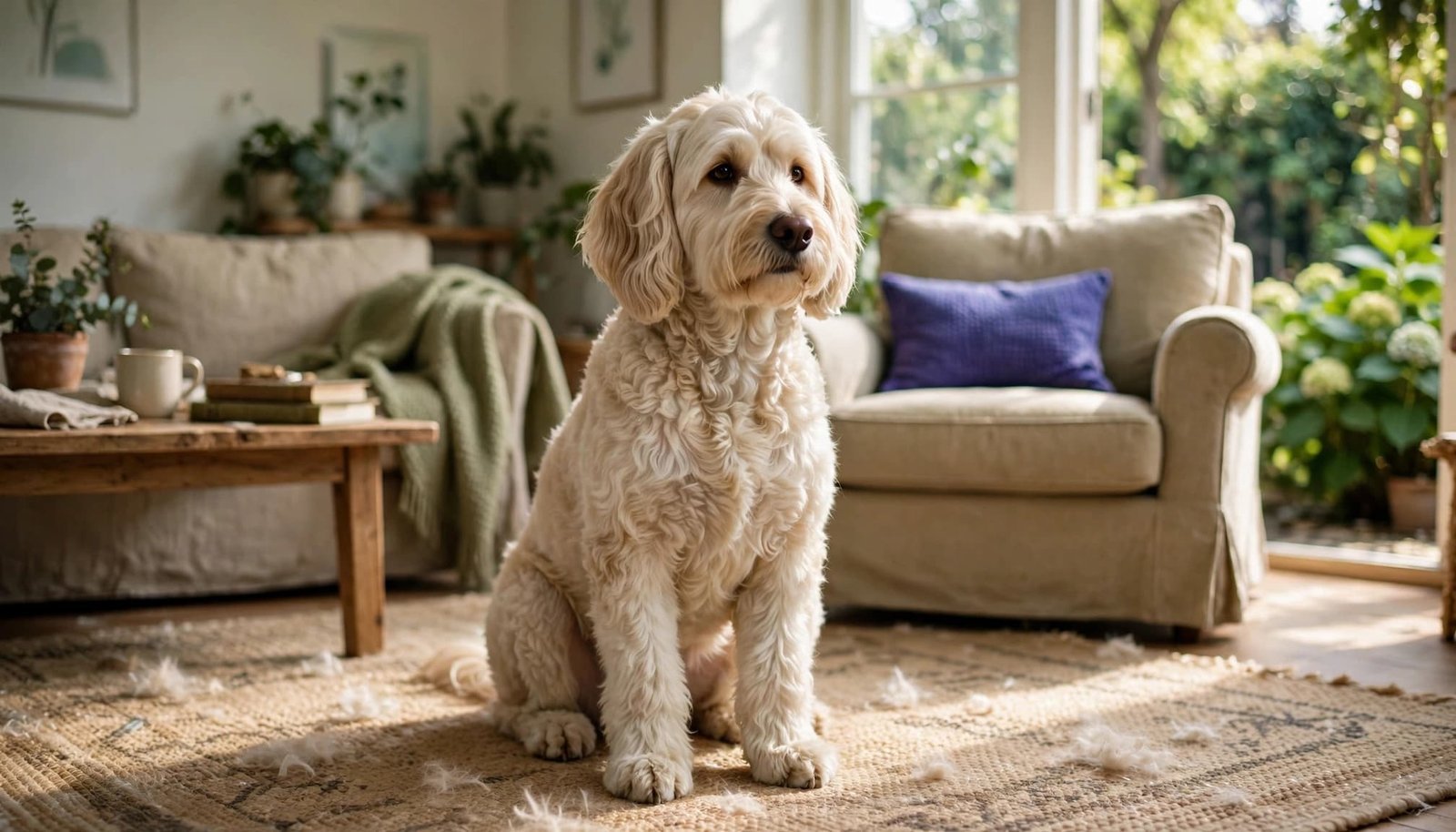
No. More Poodle ancestry may favor a lower-shedding coat. It doesn’t make a Double Doodle a hypoallergenic breed or predict whether it’ll suit your allergies.
Dog allergens are proteins associated with dander, saliva, and urine. Hair can carry those proteins, but hair itself isn’t the whole problem.
The American Kennel Club’s explanation of hypoallergenic dog claims makes that distinction clear. Poodles and their mixes can still trigger reactions.
Does Less Shedding Mean Fewer Allergens?
Not necessarily. Some Double Doodles shed visibly, while others retain loose hair inside their curls.
That trapped hair still needs removal, and the dog still produces allergens. The amount of hair a dog can shed doesn’t predict your family’s allergy response.
A sofa with little visible dog hair doesn’t establish that your home’s allergen exposure is low.
What Breeds Make a Double Doodle?
A Double Doodle is a hybrid that typically comes from crossing a Goldendoodle with a Labradoodle. A Goldendoodle combines Golden Retriever and Poodle ancestry; a Labradoodle combines Labrador Retriever and Poodle ancestry.
Goldendoodle histories credit Monica Dickens with a 1969 cross, while both parent mixes gained popularity in the 1990s. Double Doodle origins are less clearly documented.
What Do F1, F2, and F3 Mean?
In common Double Doodle terminology, an F1 has a Goldendoodle parent and a Labradoodle parent. Those parents are mixed breeds, not purebreds.
An F2 comes from two F1 Double Doodles, while an F3 comes from two F2s. These labels describe generations rather than guaranteed coat, size, or allergy traits.
Our guide to Double Doodle parent breeds and traits explains why ancestry leaves room for individual differences.
Can Puppy Coats Predict Adult Coats?
Only imperfectly. A straight coat is less common, while wavy or curly textures also occur.
Hair on a young dog may look straighter before the adult texture develops. A breeder’s coat assessment or genetic coat test may inform texture and shedding expectations, but neither measures your future allergic response.
Poodles have more than 10 standardized colors, and Double Doodles can show parti or merle patterns. Color doesn’t predict allergy compatibility, and merle isn’t a standard Poodle color.
How Can You Assess Your Family’s Allergy Risk?
Begin with the person who has symptoms, rather than a breeder’s hypoallergenic promise. An allergist can review symptoms, asthma history, and whether testing would help.
A 2024 review of hypoallergenic animals explains the limits of allergy-safe breed claims. There isn’t a dependable Double Doodle allergy-risk percentage you can use when choosing an individual dog.
Before committing to a Double Doodle, take these steps:
- Discuss dog exposure with an allergist, especially if anyone has asthma or previous breathing symptoms.
- Arrange repeated time with the individual dog when medically appropriate, rather than relying on one short visit.
- Agree on a household plan for cleaning, sleeping spaces, and what happens if symptoms become difficult to manage.
An adult dog offers a clearer picture of its established appearance and behavior. However, even repeated comfortable visits can’t guarantee tolerance after months of indoor exposure.
If your dog already lives with you, keep the bedroom dog-free and wash bedding regularly. HEPA filtration and cleaning may reduce exposure, but they don’t replace medical care, as VCA’s guidance on hypoallergenic dogs explains.
Seek urgent medical help for breathing difficulty or a severe allergic reaction. Don’t deliberately repeat an exposure that has caused wheezing.
What Grooming Does a Double Doodle Need?
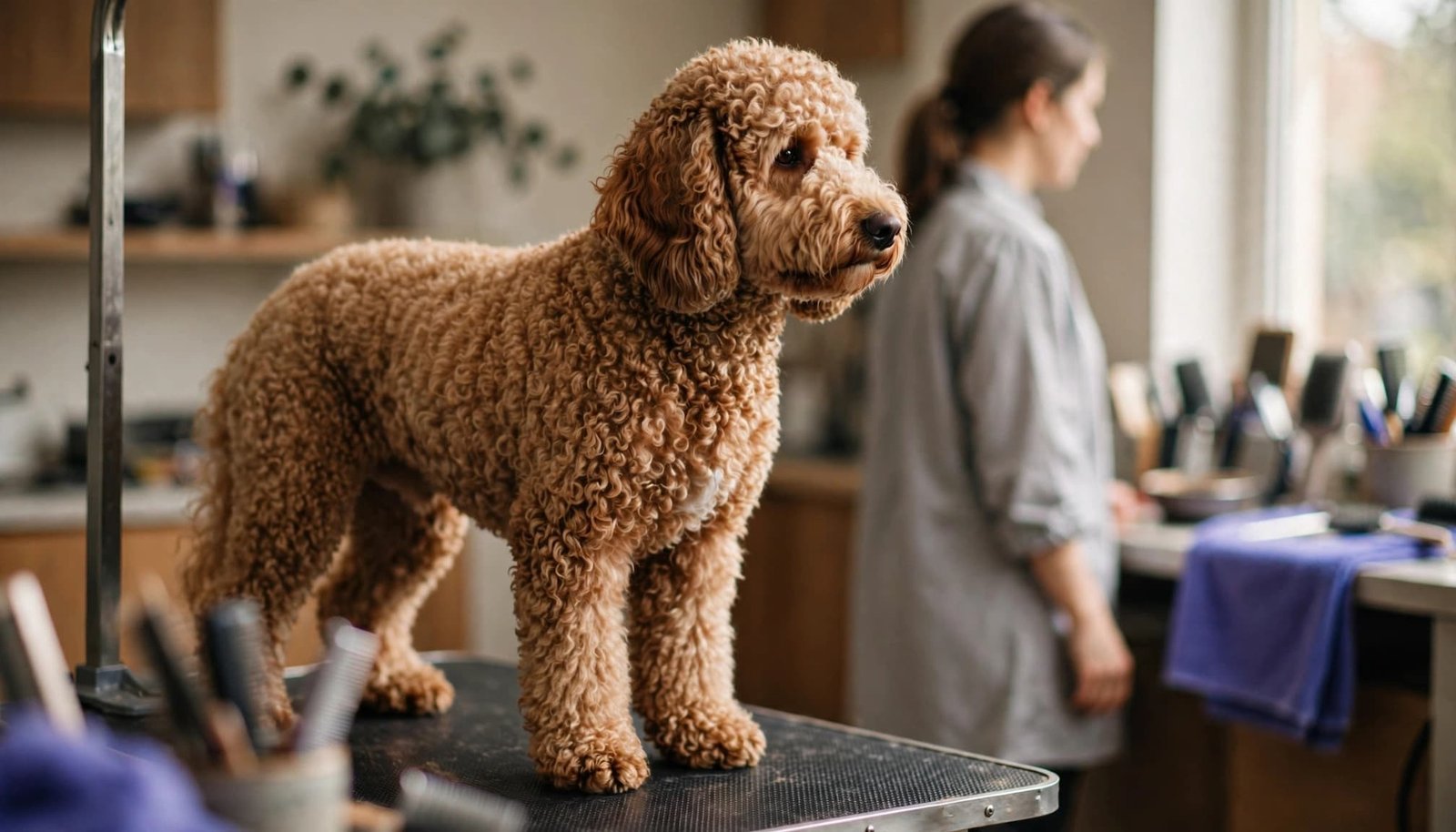
Your dog’s hair type determines the schedule. A low-shedding label doesn’t mean low maintenance, because retained hair can turn into painful mats.
How Often Should You Brush?
Once or twice weekly may suit short, manageable hair, but it can be insufficient for dense or longer hair. Some Double Doodles need daily brushing.
Inspect behind the ears, beneath the collar, and under the legs every day. Use a suitable slicker gently, then a metal comb to find tangles beneath the surface.
Our guide to Double Doodle brushing tools explains how to match equipment to coat texture. Don’t choose an undercoat-removal tool based on retriever ancestry alone.
How Often Are Baths and Haircuts Needed?
Baths every six to eight weeks and haircuts about every three months are commonly quoted schedules. However, some longer coats styled at greater length may need haircuts every six to eight weeks instead.
Arrange at least one professional grooming assessment to establish a workable haircut and routine. Bathing more often won’t make your dog allergy-safe, and harsh products can irritate skin.
Dry the coat thoroughly after baths or swimming. Leave tight mats to a groomer, never cut them with household scissors, and seek veterinary care for sores or marked pain.
Are Double Doodles Good Family Dogs?
Some Double Doodles can be friendly family pets when you meet their exercise, grooming, and training needs. Their ancestry doesn’t guarantee calm behavior or safety around children.
Are They Easy to Train?
Many are intelligent and learn readily, but you still need consistent practice. Positive reinforcement works better than punishment and helps a young dog feel safe during handling.
Start early socialization and basic obedience without overwhelming your dog. Our guidance on gradual socialization covers comfortable, gradual introductions.
Supervise children, protect the dog’s sleeping area, and teach everyone to leave food and chews alone. Your dog should always have somewhere to retreat.
What About Barking, Swimming, and Guarding?
An “average barker” label won’t predict your dog’s habits. High-pitched barks can accompany greetings or excitement, while lower sounds can accompany stress or irritation; read the whole body and situation.
Because Poodles were bred to retrieve game from water, many Double Doodles enjoy swimming. Introduce water gradually and supervise rather than assuming your dog can swim safely.
Some dogs are friendly with visitors, while others are cautious, so don’t count on a Double Doodle as a guard dog. Trauma such as a hurricane, fire, or animal attack can contribute to fear-related aggression.
Sudden aggression also warrants a veterinary examination for pain or illness. A veterinary behaviorist or qualified professional who uses positive reinforcement can help with suspected trauma.
How Long Do Double Doodles Live?
You’ll often see 12 to 15 years quoted for a healthy Double Doodle’s lifespan. Treat that as a broad planning estimate, not an independently established breed-wide average or a promise.
Size, inherited conditions, body condition, and preventive care all influence longevity. Mixed ancestry doesn’t protect your dog from problems associated with its parent breeds. Maintain a healthy weight and healthy routines with regular exercise and preventive care.
Prioritize documented parent screening for relevant joint, eye, and cardiac conditions. A DNA panel alone doesn’t replace those examinations.
Our Double Doodle wellness guide covers everyday preventive care. Persistent limping, unexplained bruising, or reduced exercise tolerance deserves veterinary attention.
How Much Does a Double Doodle Puppy Cost?
Good Dog’s Double Doodle price overview gives a national expected range of $1,800 to $2,500. Individual prices can fall outside that range, so it isn’t a fixed market rate.
A premium price doesn’t establish responsible breeding, sound health, or allergy compatibility. Documented health screening and thoughtful ongoing care matter more than unusual colors or a hypoallergenic sales pitch.
Budget beyond pickup for grooming, routine veterinary visits, food, training, and unexpected illness. Our Double Doodle puppy price guide explains what breeder fees should include.
If allergies remain uncertain, keep that uncertainty separate from the purchase price. Paying more can’t buy a guaranteed allergy-safe dog.
Frequently Asked Questions
Is a Goldendoodle Hypoallergenic?
A Goldendoodle isn’t guaranteed hypoallergenic either. The same applies to Labradoodles, Bernedoodles, and other Poodle mixes, regardless of how little hair you notice.
If predictable low shedding is your priority, a responsibly bred Poodle may offer clearer coat expectations. However, Poodles still produce allergens and require regular grooming.
What Are the Main Pros and Cons?
The potential advantages include an affectionate companion, enthusiasm for reward-based learning, and lower visible shedding in some individuals. An adult dog’s observed behavior can help you judge household fit.
The tradeoffs include uncertain allergy compatibility, coat changes as a dog matures, and potentially demanding grooming. You also need time for exercise and training, even when your dog seems easygoing.
Should You Choose the Curliest Puppy?
Curliness alone is a poor way to choose an allergy-compatible companion. It doesn’t tell you how much allergen the dog produces or how your immune system will respond.
A very curly coat may also demand more maintenance. Choose based on household fit, documented care, and medically informed allergy planning rather than appearance.
Choose the Dog, Not the Allergy Promise
A Double Doodle may shed little and still trigger allergies. The strongest starting point is realistic expectations about your health, the individual dog, and its care needs.
Before bringing one home, discuss allergy concerns with an allergist and make a practical household plan. Weigh the pros and cons alongside your allergist’s advice. A thoughtful decision gives your family and future dog a better starting point.