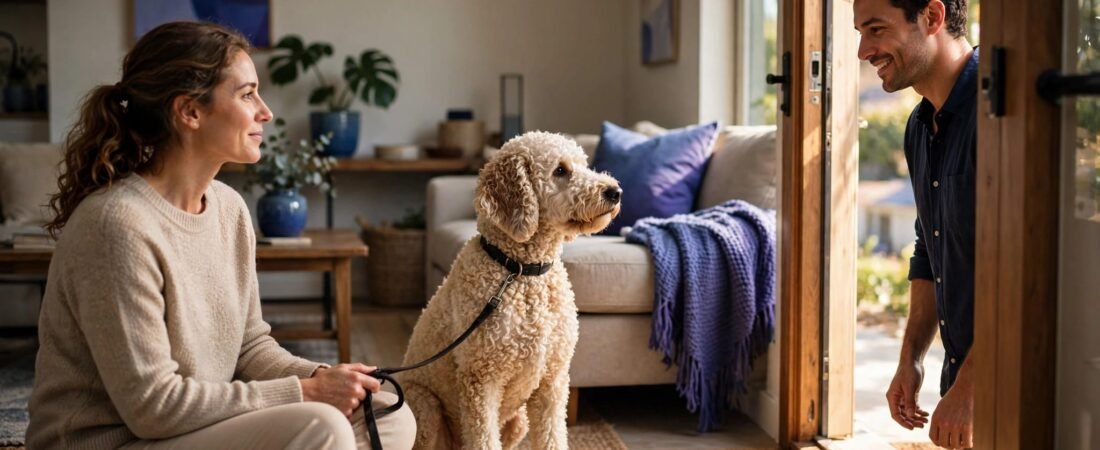
If you’re looking for a practical way to stop dog jumping on guests, prevent the doorway rush and reward four paws on the floor before anyone offers attention. Use a leash or barrier during arrivals so visitors don’t become part of an accidental jumping game.
Your dog can learn polite greetings, even if the current welcome involves muddy paws and airborne curls. Start with a setup that makes the next arrival safer, then practice when nobody’s carrying groceries.
Key Takeaways
- Put a leash on before guests arrive, and use a barrier while they enter.
- Ask guests to wait until all four paws are down, then reward calm behavior with attention.
- Teach a sit, mat behavior, or nose target during quiet practice.
- Keep everyone’s rules consistent, and make greetings easier whenever your dog struggles.
Why Your Doodle Jumps on Guests
Excitement Makes the Doorway Difficult
An opening door brings movement, voices, and the possibility of social contact. Your Doodle may jump because approaching faces and hands have led to attention before.
This isn’t unique to Doodles, and friendliness doesn’t automatically include good manners. As with other Double Doodle temperament traits, your dog’s response depends on individual temperament, experience, and training.
Attention Can Keep Jumping Going
Pushing your dog away, scolding, or saying “ouch” can still provide the interaction they’re seeking. Meanwhile, occasional enthusiastic petting teaches that jumping sometimes pays.
The American Kennel Club’s guidance on stopping jumping recommends withholding eye contact and speech until all four feet reach the floor. However, this applies to attention-seeking greetings, not a frightened dog who needs distance and support.
Set Up Before Guests Arrive
Prepare before the doorbell rings, while your dog can still listen.
- Meet basic needs first. Offer a bathroom break and an age-appropriate sniffing walk or gentle play session. These activities provide an outlet for energy and mental stimulation. Allow time to settle afterward; frantic fetch immediately before arrival may leave your dog more wound up.
- Attach a leash to a comfortable harness. Keep it loose enough for standing, sitting, and lying down. Use calm leash control to prevent contact with guests, without yanking or using tension to force your dog down.
- Choose a waiting area. A secure baby gate lets your dog observe without reaching guests. An exercise pen needs enough stability and height for your dog; a separate room needs to be comfortable and familiar.
- Brief visitors in advance. Text: “Please ignore the dog when you enter: no looking, talking, baby-talk, or reaching. I’ll let you know when we’re ready for a calm hello.”
A crate is another option only if your dog already rests there comfortably. Don’t introduce confinement for the first time during a busy arrival or leave a panicking dog to struggle.
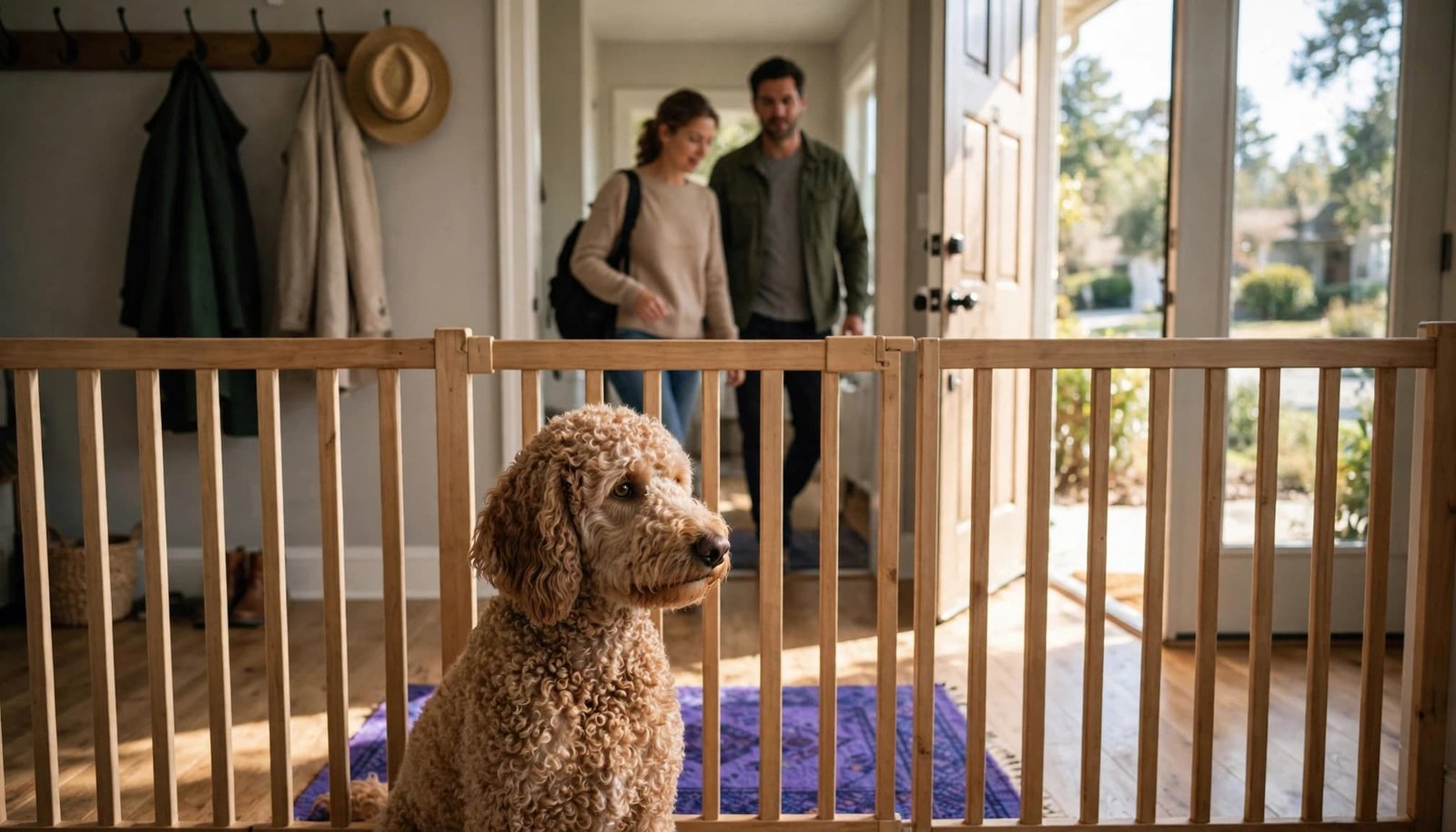
With children, older adults, or anyone unsteady, keep the barrier in place throughout entry. You don’t need a live greeting at every visit.
Follow a Calm Greeting Protocol
Handle the First 30 Seconds
Before opening the door, have your dog behind the barrier with treats ready. During the first few seconds, let guests enter without greeting your dog, then close the exterior door securely.
Next, reward paws on the floor. Hold tiny, high-value treats low at your sides, or scatter a few on the floor behind the barrier so your dog sniffs away from visitors.
Once your dog can pause and respond, cue a familiar sit and reward it. The Humane Society’s polite greeting exercise uses an approaching greeter while the dog sits; approach should depend on your dog’s behavior, not a countdown.
Respond Immediately if Jumping Starts
If a greeting is safe to attempt, let one guest approach while you supervise with a loose leash. The guest can offer brief, calm attention while paws stay down.
If your dog jumps, the guest should turn away, cross their arms, and ignore the dog until all four paws are down. Create distance with your own movement rather than pulling or scolding.
As soon as all four paws return, mark that moment with “yes” and reward low. Ask for a sit only after your dog is grounded and able to respond.
Turning away removes attention, but it doesn’t protect someone who could be knocked over. Keep physical separation when a jump would be unsafe.
Teach Skills That Replace Jumping
Practice these away from the doorway first. A skill your dog barely knows in the kitchen won’t become reliable when company arrives.
Build a Comfortable Mat Behavior
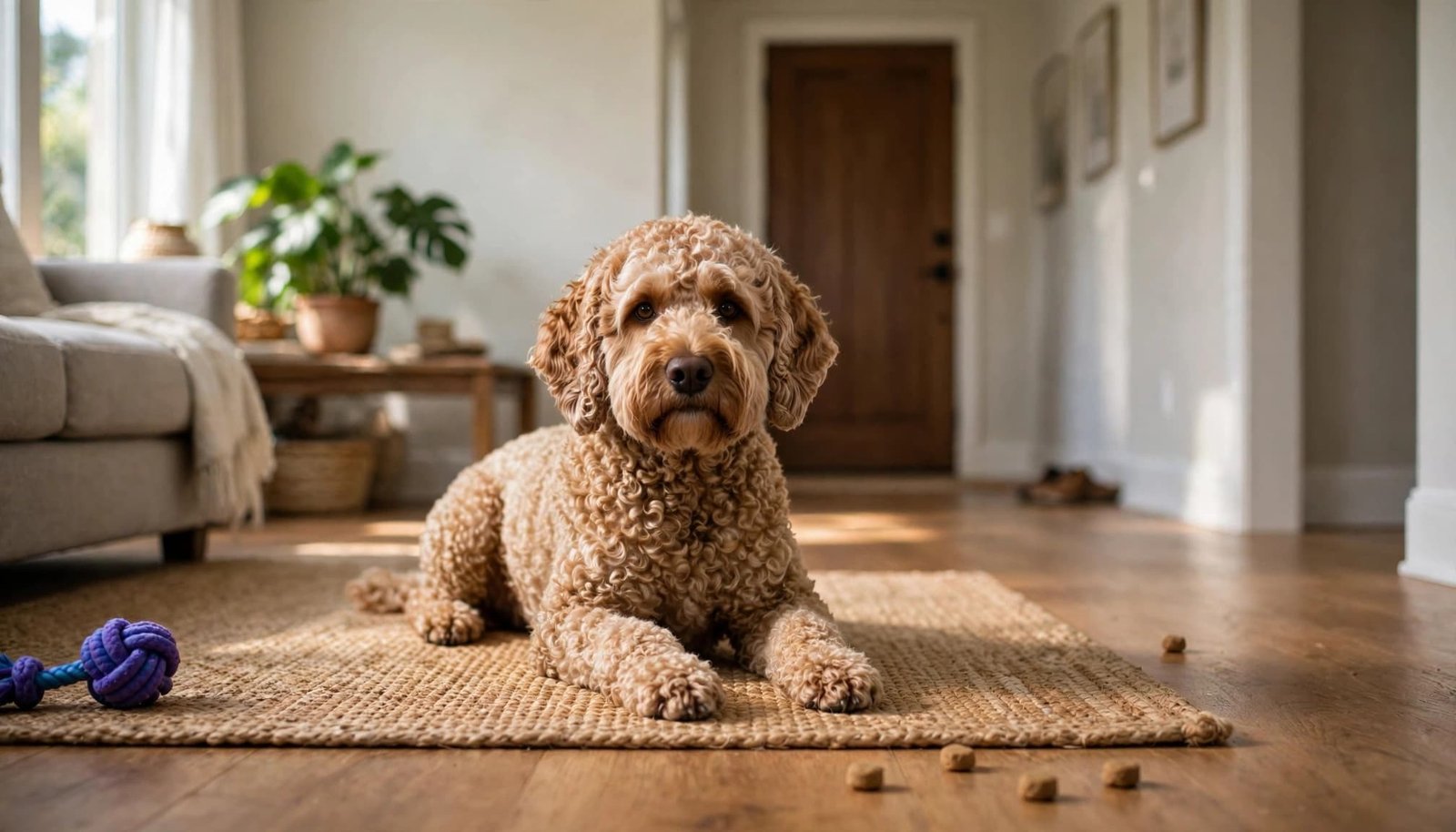
Place a comfortable mat in a quiet spot and reward voluntary approaches. Then reward standing, sitting, or lying on it before adding a cue such as “place.”
Stay nearby initially, and add distance or movement only while your dog remains comfortable. Reward on the mat rather than calling your dog off it for treats.
The same approach helps when teaching your Doodle to settle: notice calm resting before your dog gets up. Keep praise low-key so the reward doesn’t restart the excitement.
Teach a Nose Target
For hand targeting, present an empty palm close to your dog’s nose and low enough for them to touch without jumping. When their nose touches it, say “yes,” then give a treat from your other hand.
After several successful repetitions, add “touch” just before presenting your palm. Gradually practice in different quiet rooms before trying near the closed front door.
Use targeting to guide your dog toward you or their mat, rather than toward a guest’s face. Follow the Humane Society’s positive reinforcement training principles: reward the behavior promptly so your dog can connect the action with its payoff.
Follow a Multi-Week Practice Plan
Use short, successful sessions rather than waiting for real arrivals. Begin with three to six sessions daily, each lasting one to two minutes, and stop sooner if your dog becomes frustrated.
When you arrive home, rehearse five to 10 easy doorway entries if your dog stays comfortable. Have another adult supervise behind a barrier, and split repetitions across shorter rounds when needed.
Use this progression as a flexible schedule.
| Practice Period | Main Task | When to Make It Harder |
|---|---|---|
| Days 1 to 7 | Reward grounded greetings, mat rests, and nose touches without guests. | Your dog responds comfortably in quiet practice. |
| Week 2 | Recruit one calm friend who understands the rules. | Your dog stays grounded as the friend approaches. |
| Weeks 3 to 4 | Add gentle knocks or a quiet doorbell recording. | Your dog can eat and follow familiar cues. |
| Months 2 to 3 | Practice with different cooperative guests, one change at a time. | Calm responses repeat across several sessions. |
Progress depends on your dog’s responses, not the calendar. Plan for about three months of consistent practice, but don’t treat that as a universal habit-formation deadline.
Record successful greetings and what made difficult ones harder. If coats, bags, and conversation arrive together, simplify the next rehearsal rather than repeating an overwhelming setup.
Adjust When Ignoring Doesn’t Work
If turning away starts a chasing game or your dog jumps harder, increase distance and return to the barrier. Don’t keep rotating while your dog rehearses jumping against your back.
Refusing familiar treats, repeatedly lunging, or being unable to respond can mean the situation is too difficult. Move farther away, reduce the noise, and offer a rest break instead of repeating “sit.”
For a large dog you can’t safely manage, skip direct greetings until a qualified reward-based trainer helps you build a plan. Keep children and vulnerable guests out of training roles.
In a multi-Doodle home, train and greet one dog at a time. Separate food rewards if treats cause competition, and don’t assume one dog’s progress means the other is ready.
Consistency means everyone ignores jumping until your dog’s paws are down. If someone won’t follow this rule, keep your dog comfortably separated rather than allowing another rewarded jumping session.
Seek veterinary advice for sudden behavior changes, apparent pain, or new fear. Growling, snapping, persistent distress, or difficult recovery also warrant help from a qualified trainer or veterinary behaviorist.
Frequently Asked Questions
Can I Stop Jumping in Two Simple Steps?
The basic pattern has two parts: prevent jumping from earning attention, then reward a grounded alternative. However, safe barriers and repeated practice make those steps workable during actual visits.
You can prevent contact at the next arrival without expecting the underlying habit to disappear immediately.
Should Every Greeting Require a Sit?
No, standing calmly with four paws down is a useful greeting behavior too. Reward that first, then ask for a sit if your dog knows it and sits comfortably.
If sitting suddenly seems difficult or painful, pause training and contact your veterinarian.
What if My Puppy Seems Scared of Unfamiliar People?
Don’t require an approach or withhold comfort. Increase distance and let your puppy observe without anyone reaching toward them.
Use safe puppy socialization practices that reward relaxed, voluntary participation. Freezing or repeated attempts to leave mean your puppy needs an easier setup, not more pressure.
Make the Next Arrival Easier
Your Doodle learns polite greetings through consistent rewards and fewer chances to practice jumping. A barrier protects guests while your dog builds the skills for closer contact.
Before the next visit, prepare the waiting area and send your guest the greeting rules. Then reward the first quiet moment with four paws on the floor.